

If you're looking for a wrestling workout plan that builds strength, power, and endurance, you're in the right place.
Wrestling is demanding, and training without a clear plan can slow your progress or lead to burnout. This guide will help you train with purpose.
You'll learn how to structure your workouts for the offseason, preseason, in-season, and summer. I'll also cover the best strength exercises, conditioning drills, and recovery tips.
I've spent time researching wrestling training methods and strength and conditioning principles to make this guide practical and easy to follow.
My goal is to help you step onto the mat feeling stronger, faster, and more prepared.
Why Wrestlers Need a Structured Workout Plan
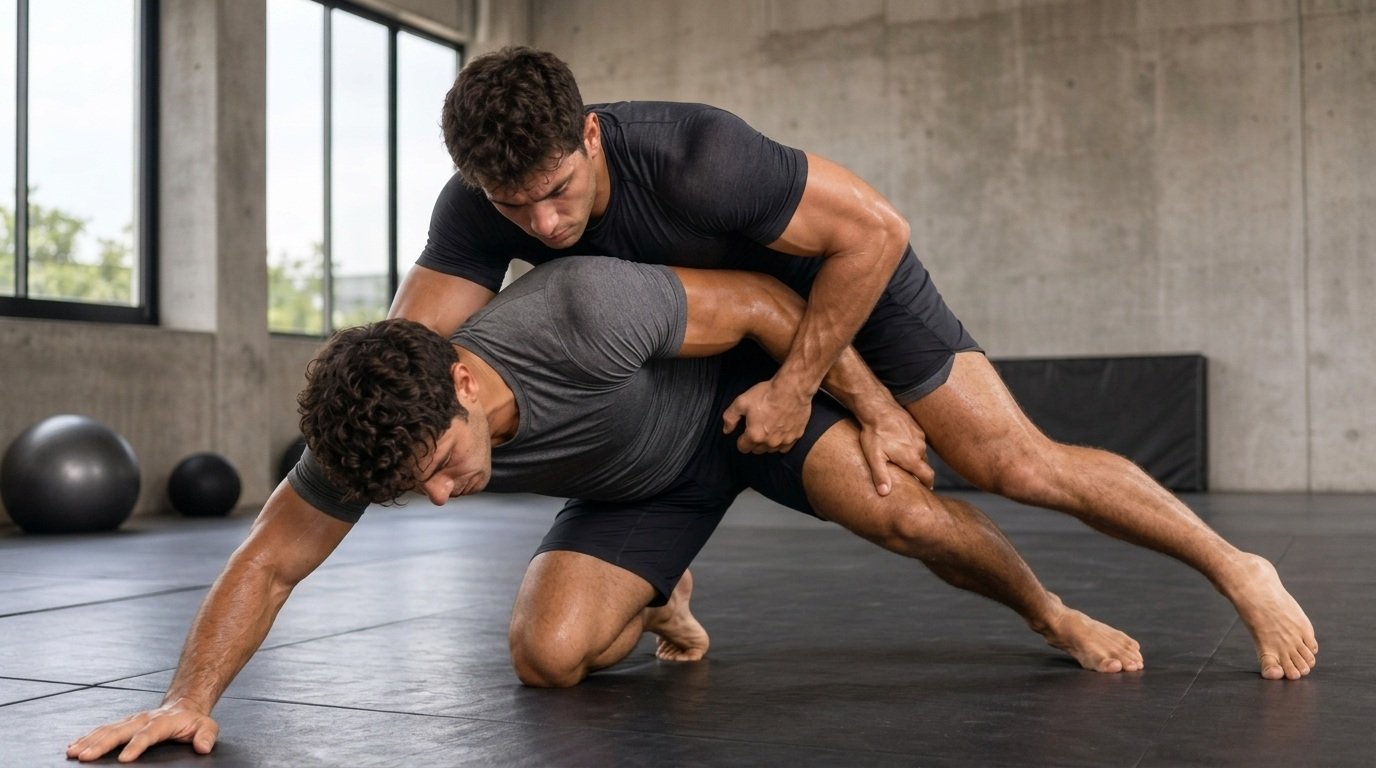
Wrestling is one of the most physically demanding sports because it requires strength, power, endurance, speed, mobility, and mental focus at the same time.
A structured workout plan helps you train each of these areas without overworking your body. Instead of doing random exercises, you follow a schedule that uses periodization to move you from building a base in the offseason all the way to peaking at competition time.
A balanced program also lowers the risk of injuries by including recovery and mobility work alongside strength and conditioning. Recovery is just as important as training because your muscles grow and repair during rest.
By following a well-planned routine, wrestlers can improve performance, stay consistent, and step onto the mat feeling stronger, faster, and better prepared for every match.
Test Your Fitness Before You Train
Before starting any wrestling workout plan, it helps to know where you stand. Simple fitness tests give you a starting point and let you track real progress over time.
Test yourself at the end of the competitive season, again at the end of the offseason, and once more just before competition begins.
Useful tests include a max-rep pull-up set, a standing broad jump, a 1.5-mile run, and top-set efforts on the squat, bench press, and deadlift.
These cover upper body endurance, explosive power, cardiovascular fitness, and absolute strength, which are the four areas that most determine who wins on the mat.
The Key Components of a Wrestling Workout Plan
A complete wrestling workout plan combines strength, power, conditioning, mobility, and core training to improve performance on the mat.
Strength Training

Strength training builds the foundation every wrestler needs. Compound exercises such as squats, deadlifts, bench presses, and pull-ups strengthen several muscle groups at once while improving overall power.
Functional strength exercises help you control opponents, maintain balance, and generate force during takedowns. Grip strength is equally important because strong hands and forearms improve your ability to hold, pull, and defend against your opponent.
Neck training is often ignored but critical for wrestlers. Weighted neck extensions and curls protect the cervical spine during scrambles and bridging, which are high-risk movements for this joint.
Aim for 3 to 5 strength sessions each week, focusing on good technique and gradually increasing the weight as your body becomes stronger.
Explosive Power

Wrestlers need explosive power to shoot quickly, finish takedowns, and react during fast exchanges. Developing rate of force development, meaning how fast you can produce force, is just as important as how much force you can produce.
Olympic lift variations like power cleans and push presses teach your body to produce force rapidly. Plyometric exercises such as box jumps, broad jumps, and jump squats improve speed and jumping ability.
Medicine ball slams and rotational throws develop explosive upper-body and core strength that carries over well to wrestling movements. Include explosive training 2 to 3 times each week, perform every repetition with maximum effort, and rest enough between sets to maintain power.
Conditioning

Good conditioning allows wrestlers to maintain a high pace from the first whistle to the last. High-intensity interval training (HIIT), sprint intervals, and wrestling circuits improve both aerobic and anaerobic endurance.
Building a strong aerobic base with long slow distance cardio, about 30 minutes at 70 percent of your max effort, is important during the offseason before you shift to higher-intensity work.
These workouts prepare your body for repeated bursts of effort followed by short recovery periods, similar to what happens during a match. Conditioning sessions should challenge your cardiovascular system without affecting your recovery from strength training.
Perform 2 to 3 conditioning workouts each week, varying the intensity to build endurance while avoiding unnecessary fatigue before practices or competitions.
Mobility and Flexibility

Good mobility helps wrestlers move freely while reducing the chance of injury. Begin each workout with dynamic warm-ups such as leg swings, walking lunges, and arm circles to prepare your joints and muscles.
The Cossack squat and 90/90 hip drill are two of the best movements for opening up the hips, which are heavily loaded during shots and scrambles. Spend extra time improving hip and shoulder mobility because these areas are heavily involved during wrestling techniques.
Finish training with gentle static stretching to improve flexibility and help your muscles recover. Regular mobility work supports better movement, deeper positions during takedowns, and smoother transitions on the mat while keeping your body ready for training.
Core Training
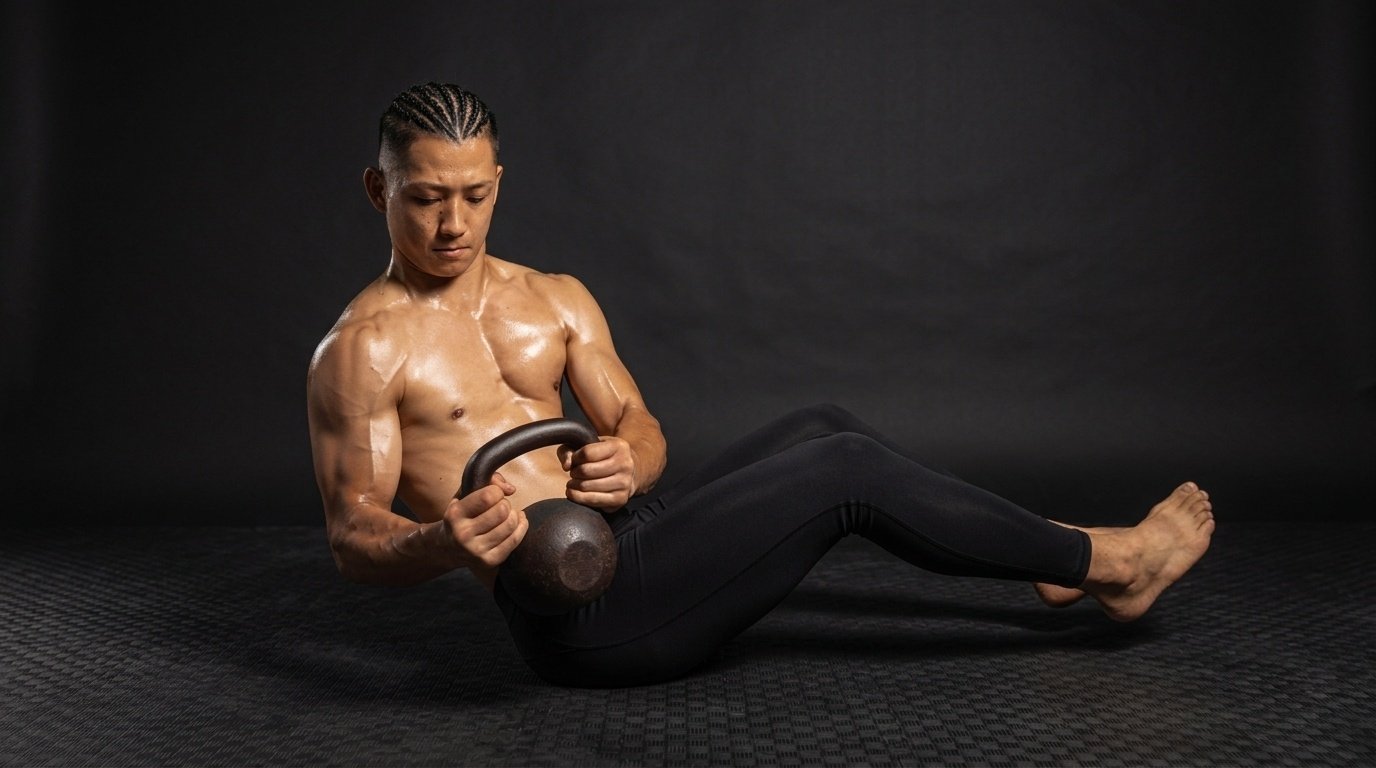
A strong core helps wrestlers transfer power between the upper and lower body while improving balance and stability. Include anti-rotation exercises like the Pallof press to build resistance against twisting forces.
Stability exercises such as planks and suitcase carries strengthen the muscles that support your spine during grappling. Rotational movements like medicine ball rotational throws improve the ability to generate force during shots and escapes.
Train your core 2 to 4 times per week, focusing on quality movement rather than high repetitions to develop strength that carries over to wrestling performance.
Wrestling Workout Plan for the Offseason
The offseason is the best time to build strength, improve conditioning, and fix weaknesses before the next wrestling season begins.
Weekly Schedule
During the offseason, focus on building a strong fitness base without the pressure of competition. A push/pull/legs split works well here because it gives each muscle group enough volume and recovery time.
Plan 4 to 5 strength training sessions each week to increase overall muscle and power. Add 2 to 3 conditioning workouts using LSD cardio, sprints, circuits, or HIIT to improve endurance.
Include mobility work daily or at least after every workout to maintain flexibility and reduce injury risk.
Schedule 1 to 2 complete rest days each week so your body has enough time to recover and grow stronger. Staying consistent during the offseason creates a solid foundation for the months ahead.
Sample Offseason Workout
This full-body workout focuses on building strength while improving functional fitness for wrestling.
Complete 3 to 4 sets of each exercise using a weight that challenges you without affecting your form.
| Exercise | Sets | Reps |
| Back Squats | 4 | 6-8 |
| Deadlifts | 3 | 5-6 |
| Bench Press | 3 | 8-10 |
| Pull-Ups | 3 | 8-12 |
| Face Pulls | 3 | 12-15 |
| Farmer's Carries | 3 | 30-40 meters |
| Neck Extensions | 3 | 15-20 |
| Sled Pushes | 4 | 20-30 meters |
Wrestling Workout Plan for the Preseason
The preseason shifts your focus from building strength to improving power, speed, and wrestling-specific conditioning.
Weekly Schedule
As the season gets closer, slightly reduce heavy lifting while increasing explosive exercises and sport-specific conditioning. Aim for 3 to 4 strength sessions, 2 to 3 conditioning workouts, and 2 to 3 wrestling technique practices each week.
Add agility drills like ladder work, the Y-drill, and the Z-drill to sharpen footwork and reactive quickness.
Continue mobility work before and after training to improve movement quality and recovery. Leave at least one full rest day each week to stay fresh.
This balance helps you carry your offseason strength into faster, more explosive movements that match the demands of wrestling competition.
Sample Preseason Workout
This workout prepares your body for match intensity by combining moderate-heavy lifting with explosive exercises and conditioning.
| Exercise | Sets | Reps |
| Zercher Squat or Front Squat | 4 | 5-6 |
| Push Press | 3 | 6-8 |
| Box Jumps | 3 | 8 |
| Pull-Ups | 3 | 8-10 |
| Medicine Ball Slams | 3 | 12 |
| Ladder Agility Drills | 5 | rounds |
| Battle Rope Intervals | 5 | 30 sec work / 30 sec rest |
Wrestling Workout Plan During the Season
During the season, the goal is to maintain strength and stay healthy without adding unnecessary fatigue before matches.
Weekly Schedule
Reduce your training volume while keeping the intensity high enough to maintain absolute strength. Most wrestlers benefit from 2 strength workouts, 1 to 2 light conditioning sessions, regular wrestling practice, and daily mobility work.
The conditioning from practice is usually enough to keep your cardiovascular fitness sharp during the season, so avoid adding extra cardio work on top of a heavy match schedule.
Prioritize sleep, hydration, and recovery between practices and competitions. Avoid adding extra workouts that leave you feeling tired before match day.
The goal is to stay strong, explosive, and healthy throughout the season rather than trying to build large amounts of new muscle.
Sample In-Season Workout
Use this workout once or twice each week to maintain strength while supporting recovery.
| Exercise | Sets | Reps |
| Back Squats | 3 | 5 |
| Bench Press | 3 | 5 |
| Pull-Ups | 3 | 8 |
| Farmer's Carries | 3 | 30 meters |
| Face Pulls | 3 | 12 |
| Plank | 3 | 45-60 seconds |
| Light Sled Push | 3 | 20 meters |
Summer Wrestling Workout Plan
Summer is a great time to improve strength, speed, conditioning, and wrestling skills before the next competitive season.
Weekly Schedule
A balanced summer program should include 3 to 4 strength workouts, 2 speed sessions, 2 conditioning workouts, and 3 to 5 wrestling technique practices each week.
Add mobility exercises before every workout and allow at least one full recovery day each week.
This schedule helps you improve multiple fitness qualities while continuing to sharpen your wrestling technique during the offseason.
Sample Summer Workout
This workout combines strength, speed, conditioning, and wrestling-specific movements into one balanced session.
| Exercise | Sets | Reps |
| Front Squats | 4 | 6 |
| Romanian Deadlifts | 3 | 8 |
| Sprint Intervals | 8 | 40 meters |
| Medicine Ball Slams | 3 | 12 |
| Rope Climbs | 3 | as many as possible |
| Wrestling Drills | 20-30 | minutes |
Best Exercises for Wrestlers
The right exercises help wrestlers build strength, power, endurance, and stability for better performance during training and competition.
Squats: Build lower-body strength and power for stronger shots, takedowns, and overall athletic performance.
Zercher Squat: Mimics wrestling positions by loading the upper back and core hard while requiring you to hold the bar in the crook of your elbows. Great for building functional mat strength.
Deadlifts: Strengthen the posterior chain, grip, and core while improving pulling power and lifting strength.
Front Squats: Improve leg strength, core stability, and posture while closely matching wrestling positions.
Pull-Ups: Develop upper-body pulling strength needed for clinches, escapes, and controlling opponents.
Chin-Ups: Build the lats, biceps, and grip while increasing upper-body endurance and control.
Bulgarian Split Squats: Improve single-leg strength, balance, and stability while correcting muscle imbalances.
Push Press: Increase explosive upper-body power using coordinated leg drive and shoulder strength.
Farmer's Carries: Strengthen the grip, forearms, core, and upper back while improving overall stability.
Sled Pushes: Build lower-body power and conditioning with minimal impact on the joints.
Rope Climbs: Improve grip strength, upper-body endurance, and body control through climbing movements.
Battle Ropes: Increase cardiovascular fitness while developing shoulder endurance and upper-body conditioning.
Medicine Ball Slams: Build explosive power through the hips, core, and upper body using fast, forceful movements.
Box Jumps: Improve lower-body explosiveness, speed, and jumping ability for quick wrestling movements.
Turkish Get-Ups: Strengthen the core, shoulders, and entire body while improving balance, stability, and coordination.
Face Pulls: Protect the shoulder joint and strengthen the rear deltoids and rotator cuff muscles that get loaded hard during underhooks and overhooks.
Neck Extensions and Curls: Build the neck strength needed to bridge, control ties, and avoid injury during scrambles. This is one of the most overlooked exercises in wrestling training.
Wrestling Conditioning Workouts
Conditioning workouts help wrestlers maintain a high pace, recover faster between exchanges, and perform consistently throughout a match.
Sprint Intervals

Sprint intervals improve both speed and anaerobic endurance, making them ideal for wrestling.
Sprint 30 to 50 meters at maximum effort, then walk back or rest for 60 to 90 seconds before repeating.
Complete 6 to 10 rounds, depending on your fitness level. This workout trains your body to recover quickly between explosive efforts, similar to the demands of a wrestling match.
Wrestling Circuits

Wrestling circuits combine strength and conditioning into one workout.
Perform exercises such as burpees, kettlebell swings, push-ups, jump squats, mountain climbers, and battle ropes for 30 to 45 seconds each with 15 to 30 seconds of rest.
Complete 3 to 5 rounds to improve endurance, muscular stamina, and mental toughness while preparing your body for repeated high-intensity efforts.
Assault Bike Sessions

The Assault Bike is an excellent tool for improving cardiovascular fitness without adding excessive impact.
Alternate between 20 to 30 seconds of all-out effort and 60 to 90 seconds of easy pedaling. Complete 8 to 12 rounds for a challenging interval workout.
These sessions improve both aerobic and anaerobic conditioning while helping wrestlers recover between intense bursts during competition.
Hill Sprints

Running uphill develops explosive leg power, acceleration, and conditioning at the same time. Sprint uphill for 15 to 30 seconds, then walk back down for recovery before repeating.
Complete 6 to 10 sprints, focusing on powerful strides and good running posture.
Hill sprints place less stress on the joints than flat-ground sprints while improving strength, endurance, and overall athletic performance.
Long Slow Distance Cardio

LSD cardio is often skipped but it builds the aerobic base that makes every other type of conditioning more effective. Run, bike, or row at about 70 percent of your maximum effort for 30 minutes.
Two sessions per week in the offseason is enough to build cardiovascular capacity without taking away from your strength work.
Recovery Tips for Wrestlers
Recovery allows your body to repair, adapt, and perform at its best during every practice and competition.
- Sleep: Aim for 8 to 10 hours of quality sleep each night to support muscle recovery and performance.
- Nutrition: Eat balanced meals with enough protein, carbohydrates, and healthy fats to fuel training and recovery. If you are cutting weight for a specific weight class, reduce volume before reducing calories to protect strength and muscle mass.
- Hydration: Drink plenty of water throughout the day and replace fluids lost during hard training sessions.
- Mobility Work: Stretch regularly and perform foam rolling or mobility drills to reduce stiffness and improve movement.
- Rest Days: Schedule at least one full rest day each week to allow your muscles and nervous system to recover.
Conclusion
Building a great wrestling workout plan takes more than lifting heavy weights.
From what I've learned, the biggest improvements come from staying consistent, recovering well, and focusing on good technique every time you train.
Think about how much more confident you'll feel stepping onto the mat knowing you've prepared your body for every challenge.
Keep showing up, trust the process, and your hard work will pay off. If this guide helped you, leave a comment below, share it with your teammates, or try our other wrestling training guides.
Frequently Asked Questions
Should wrestlers lift heavy weights?
Yes, but heavy lifting should be balanced with explosive training, mobility work, and proper recovery for the best results. Developing absolute strength is one of the biggest separators at the national and collegiate level.
How do wrestlers improve conditioning?
Wrestlers improve conditioning with sprint intervals, HIIT workouts, LSD cardio, wrestling circuits, and regular mat practice that matches competition demands.
Can beginners follow a wrestling workout plan?
Yes. Beginners should start with lighter weights, focus on learning proper technique, and gradually increase training intensity over time.
Should wrestlers train their neck?
Yes. Neck training is one of the most important and most overlooked parts of a wrestling program. Weighted neck extensions and curls protect against bridging injuries and improve tie-up strength.