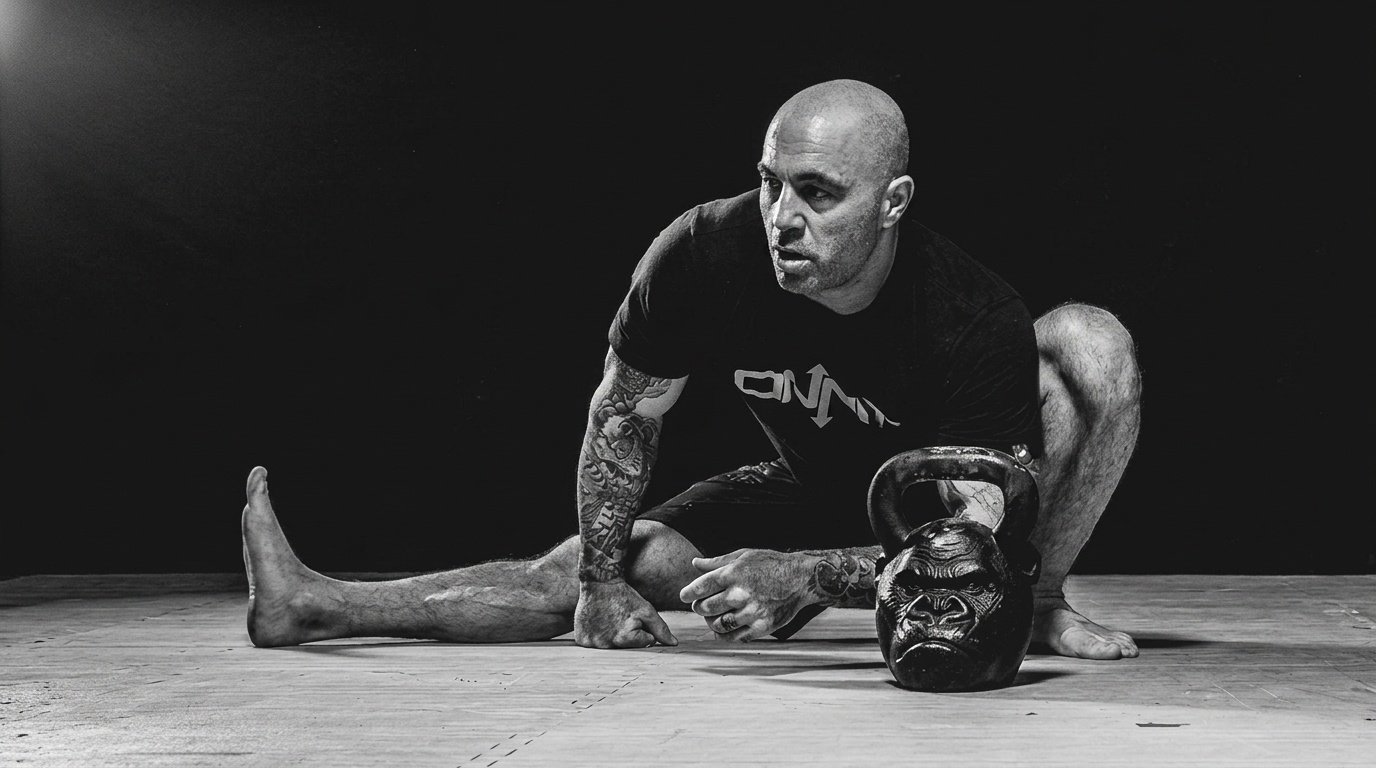
If you're searching for the Joe Rogan kettlebell workout, you probably want to know what exercises he does and whether the routine is worth trying.
Kettlebell training has become a big part of his fitness approach because it builds strength, conditioning, and endurance in less time.
In this guide, you'll learn the exercises commonly linked to Joe Rogan's workout, a sample training plan, the benefits of each movement, and tips to perform them safely.
I've spent time researching Joe Rogan's training habits along with trusted kettlebell training principles to make this guide practical and easy to follow. My goal is to help you train with confidence and get the most from every workout.
What Is the Joe Rogan Kettlebell Workout?

The Joe Rogan kettlebell workout is built around simple, effective movements that improve strength, conditioning, mobility, and endurance.
Rather than following a single fixed routine every day, Joe Rogan regularly includes kettlebell exercises as part of his overall fitness program, which also features Brazilian Jiu-Jitsu, martial arts, bodyweight training, and cardio.
He holds a black belt in BJJ, so his training is built around real athletic performance, not just aesthetics.He favors compound movements that work several muscle groups at once, helping him get a full-body workout in less time.
Exercises such as one-arm kettlebell swings, windmills, clean and presses, and renegade rows make up the core of the routine he has shared publicly through his brand Onnit.
This approach develops functional strength, improves grip and core stability, increases cardiovascular fitness, and supports athletic performance, making kettlebells a practical choice for both home and gym workouts.
Why Joe Rogan Uses Kettlebells
Kettlebells fit well into Joe Rogan's training because they combine strength, conditioning, and athletic movement in a single workout.
- Full-body training: Most kettlebell exercises work multiple muscle groups at the same time for an efficient workout.
- Functional strength: The movements improve real-world strength, balance, coordination, and overall athletic performance that carries over directly to grappling and combat sports.
- Cardiovascular conditioning: High-intensity kettlebell circuits raise your heart rate while building muscular endurance, and they also create an EPOC effect that keeps your body burning calories after the session ends.
- Grip strength: Holding and controlling kettlebells strengthens your hands, forearms, and grip for lifting and combat sports.
- Time-efficient workouts: A short kettlebell session can train strength, power, and endurance without spending hours in the gym. Rogan's full routine takes about 30 to 45 minutes.
Joe Rogan Kettlebell Workout Routine
This is the routine most closely linked to Joe Rogan's actual training, as shared through Onnit. It starts with a bodyweight warm-up, then moves into four main kettlebell exercises.
Warm-Up First:
Before picking up a kettlebell, Rogan completes 2 to 3 rounds of 20 deep squats and 20 push-ups.
The deep squats open up the hips and activate the posterior chain.
The push-ups warm up the shoulders, chest, and triceps for the pressing and stabilizing work ahead.
Don't skip this. Rogan has said that skipping the warm-up is asking for trouble, especially before explosive kettlebell movements.
1. One-Arm Kettlebell Swing

Stand with your feet shoulder-width apart and hold the kettlebell in one hand. Hinge at your hips, swing the kettlebell back between your legs, then drive your hips forward to swing it to chest height. Let your hips generate the power rather than pulling with your arm.
One-arm swings work the glutes, hamstrings, core, lower back, and shoulders while also improving cardiovascular endurance and rotational stability.
Keep your back neutral and your core engaged throughout the movement. If you are new to one-arm swings, start with the two-arm version to learn the hip hinge pattern first. Perform 3 sets of 10 repetitions per side.
2. Kettlebell Clean and Press

Start with the kettlebell between your feet. Drive through your hips to clean the kettlebell into the rack position at shoulder level, then press it overhead until your arm is fully extended. Lower it back to the rack position and repeat before switching sides.
Keep your wrist straight in the rack and brace your core during the press to avoid arching your lower back.
This compound exercise builds full-body strength, especially in the shoulders, back, legs, and core, while improving coordination and power.
Perform 3 sets of 10 repetitions per arm.
3. Kettlebell Windmill
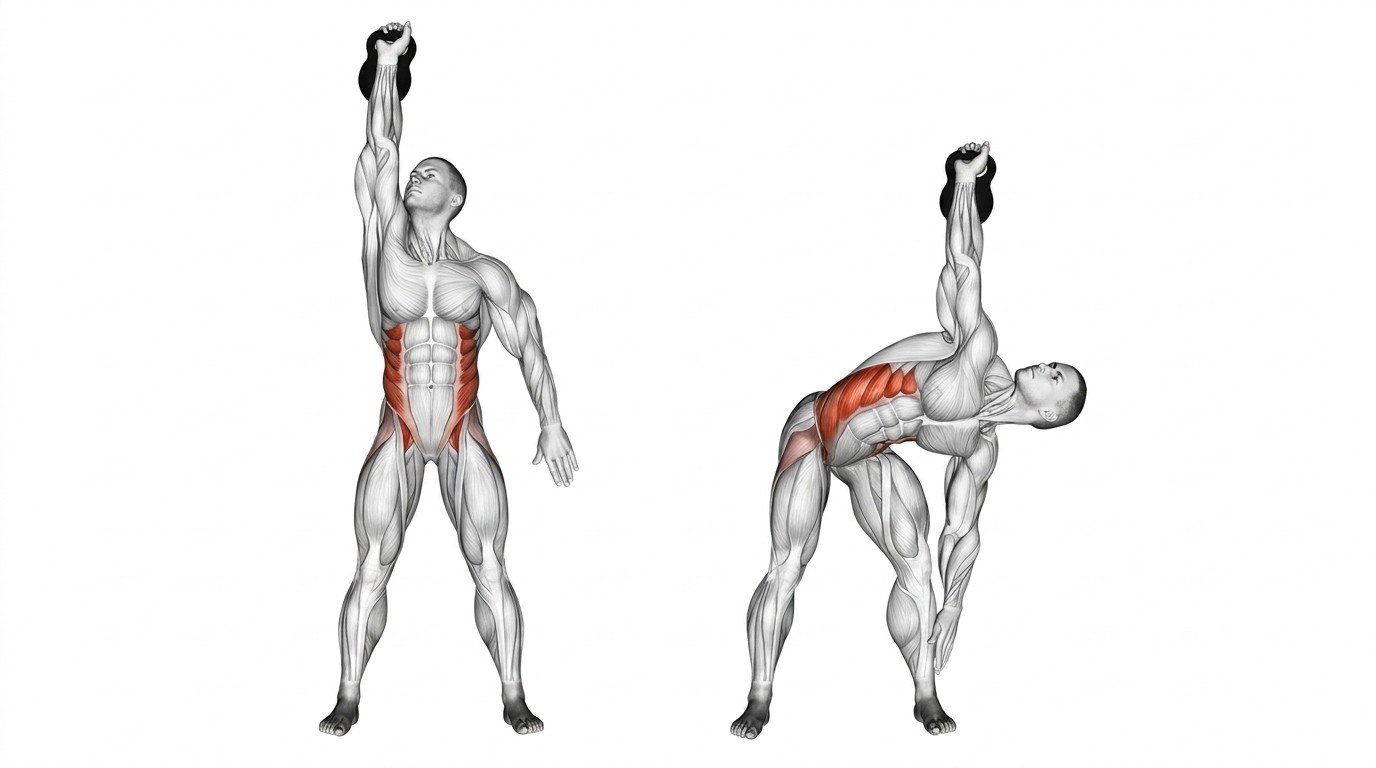
Hold a kettlebell locked out overhead in one hand. Push your hip out to the same side as the kettlebell while lowering your opposite hand down toward your foot, keeping your eyes on the bell the whole time.
This exercise trains your obliques, shoulder stability, hip mobility, and thoracic rotation. Rogan has said the whole point of windmills is working on range of motion, not loading up heavy.
Use a lighter weight than you think you need and focus on moving slowly and keeping the kettlebell aligned directly over your shoulder joint throughout. Perform 3 sets of 10 repetitions per side.
4. Renegade Row

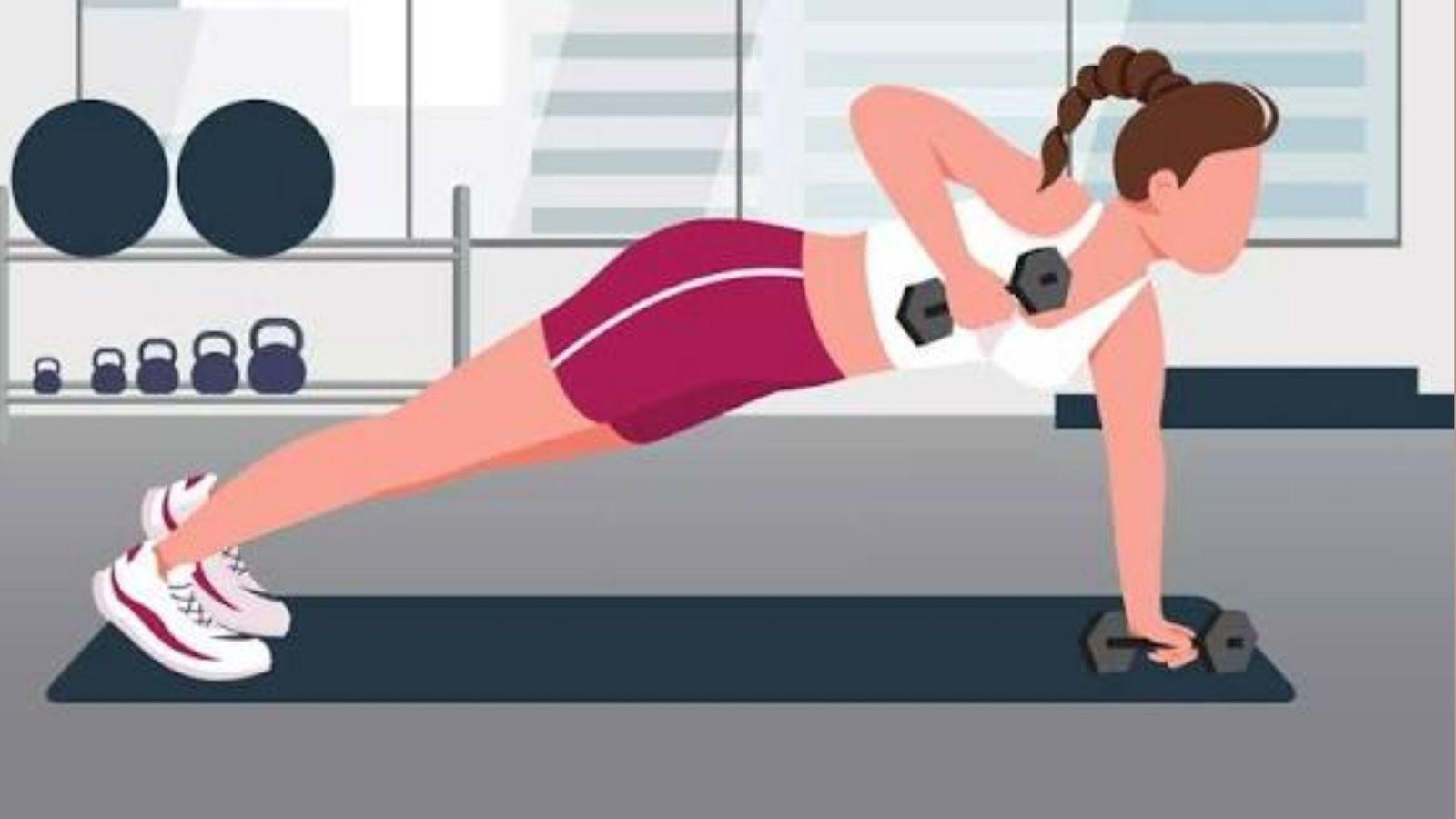
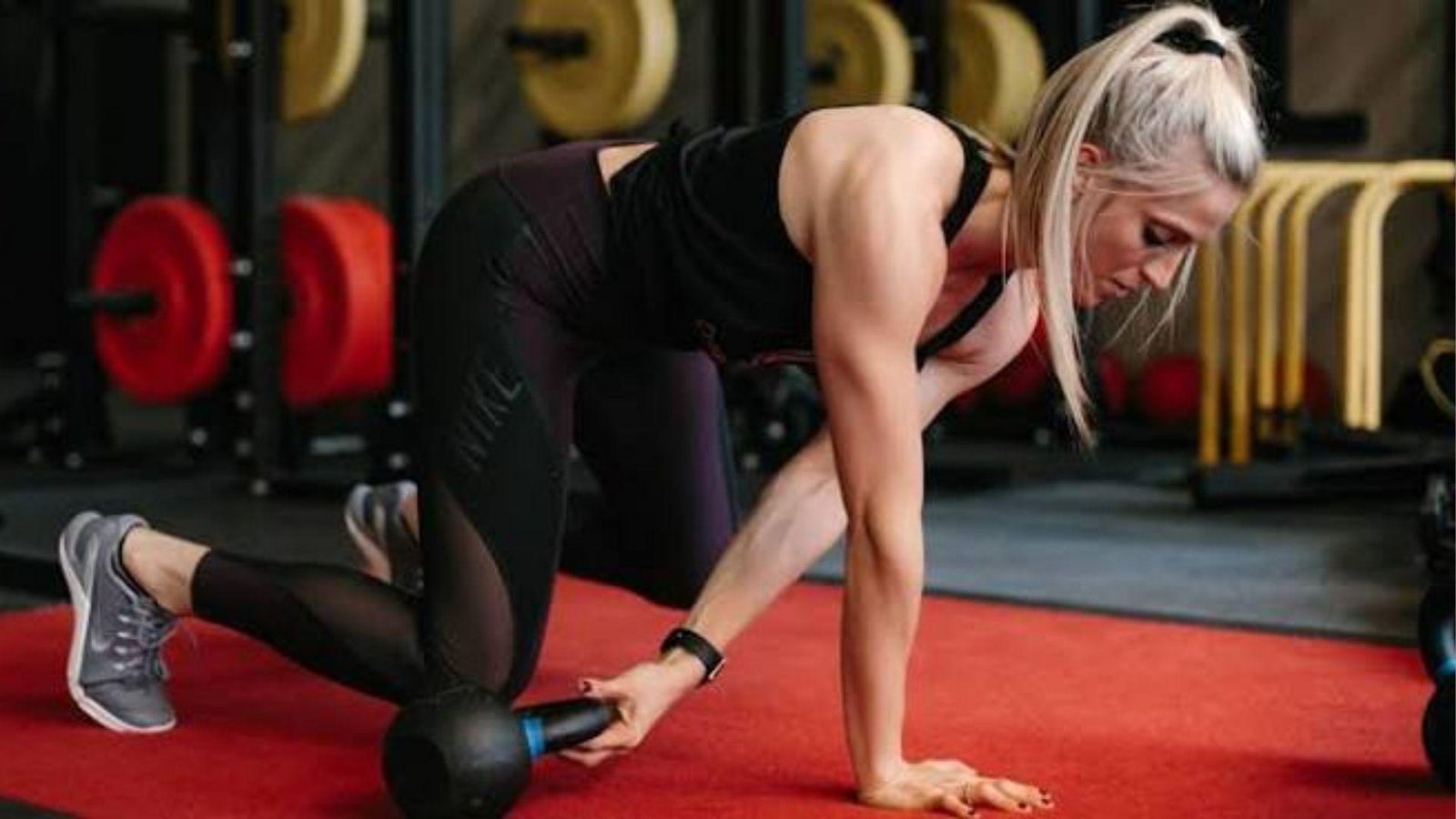
Begin in a high plank position with your hands gripping two kettlebells. Row one kettlebell toward your waist while balancing on the other arm, then alternate sides. In Rogan's version, he adds a push-up between each row to make it more demanding.
This exercise strengthens your back, core, shoulders, and arms at the same time. Keep your hips level and avoid rotating your torso as you lift the weight.
Perform 3 sets of 10 repetitions per side.
5. Goblet Squat
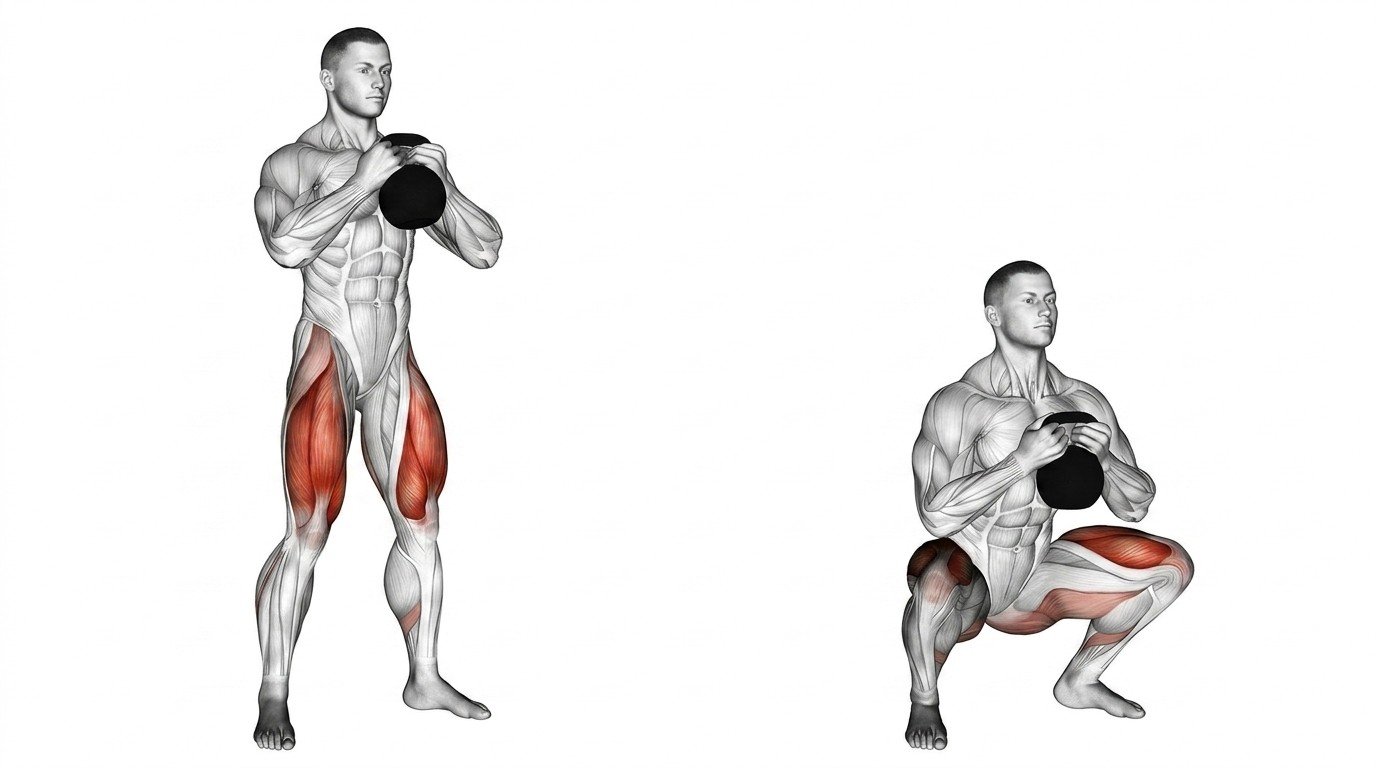
Hold a kettlebell close to your chest with both hands and stand with your feet slightly wider than shoulder-width apart. Lower into a squat until your thighs are at least parallel to the floor, then push through your heels to stand.
Keep your chest up, knees tracking over your toes, and core tight during the movement. Goblet squats strengthen the quadriceps, glutes, hamstrings, and core while improving squat technique and mobility.
Perform 3 to 4 sets of 10 to 12 repetitions, using a weight that challenges you without sacrificing proper form.
6. Turkish Get-Up
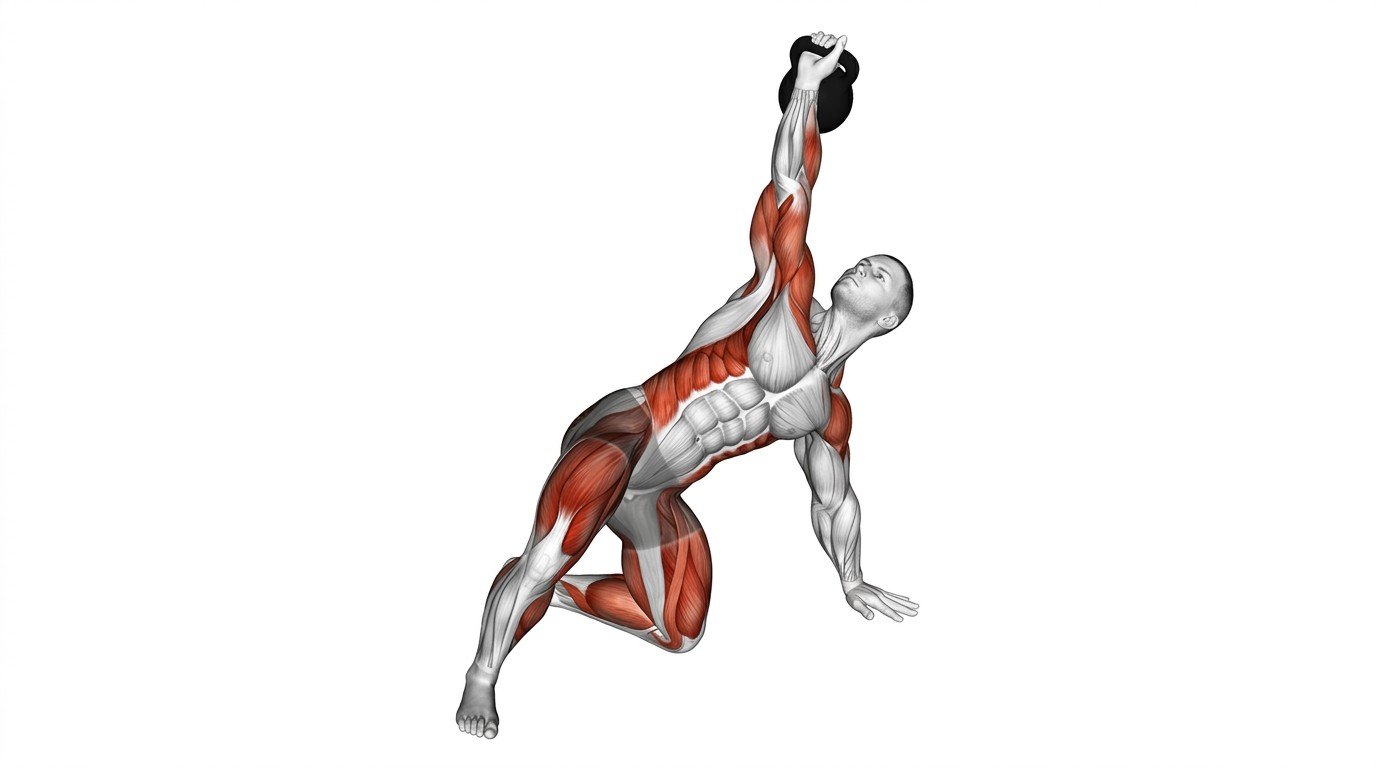
Begin by lying on your back with one kettlebell locked out overhead and the same-side knee bent. Slowly move from the floor to a standing position while keeping the kettlebell stable above your shoulder, then reverse the movement with control.
This exercise improves core stability, shoulder strength, balance, coordination, and mobility while strengthening nearly every major muscle group. Focus on slow, controlled movements rather than speed, and keep your eyes on the kettlebell throughout the exercise.
Complete 3 sets of 3 to 5 repetitions per side using a manageable weight.
7. Kettlebell Snatch
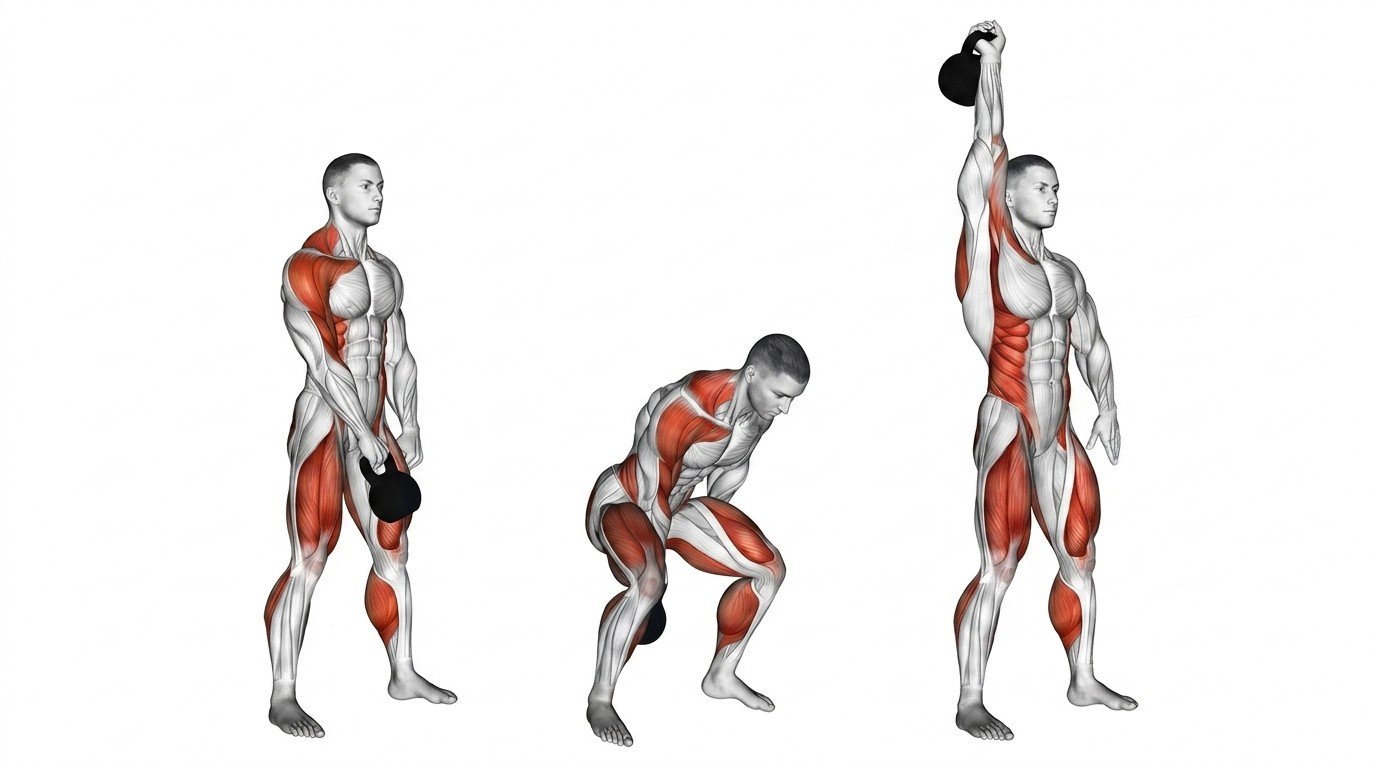
Stand with the kettlebell between your feet and swing it back before driving through your hips to lift it in one smooth motion overhead. The kettlebell should rotate around your hand instead of slamming into your forearm.
This explosive exercise develops power, endurance, grip strength, and cardiovascular fitness while working the glutes, hamstrings, shoulders, and core. Maintain a neutral spine, keep the movement fluid, and avoid relying on your arms to lift the weight.
Perform 3 sets of 8 to 10 repetitions per side with good technique.
8. Double Kettlebell Front Squat

Hold one kettlebell in each hand in the front rack position with your elbows close to your body. Squat until your thighs are parallel to the floor or lower, then drive back to standing while keeping your chest upright.
This variation places greater demand on your quadriceps, glutes, core, and upper back because the front-loaded position requires extra stability. Keep your heels flat and avoid leaning forward during the lift.
Perform 3 to 4 sets of 8 to 10 repetitions, resting about 90 seconds between sets.
9. Kettlebell Farmer's Carry
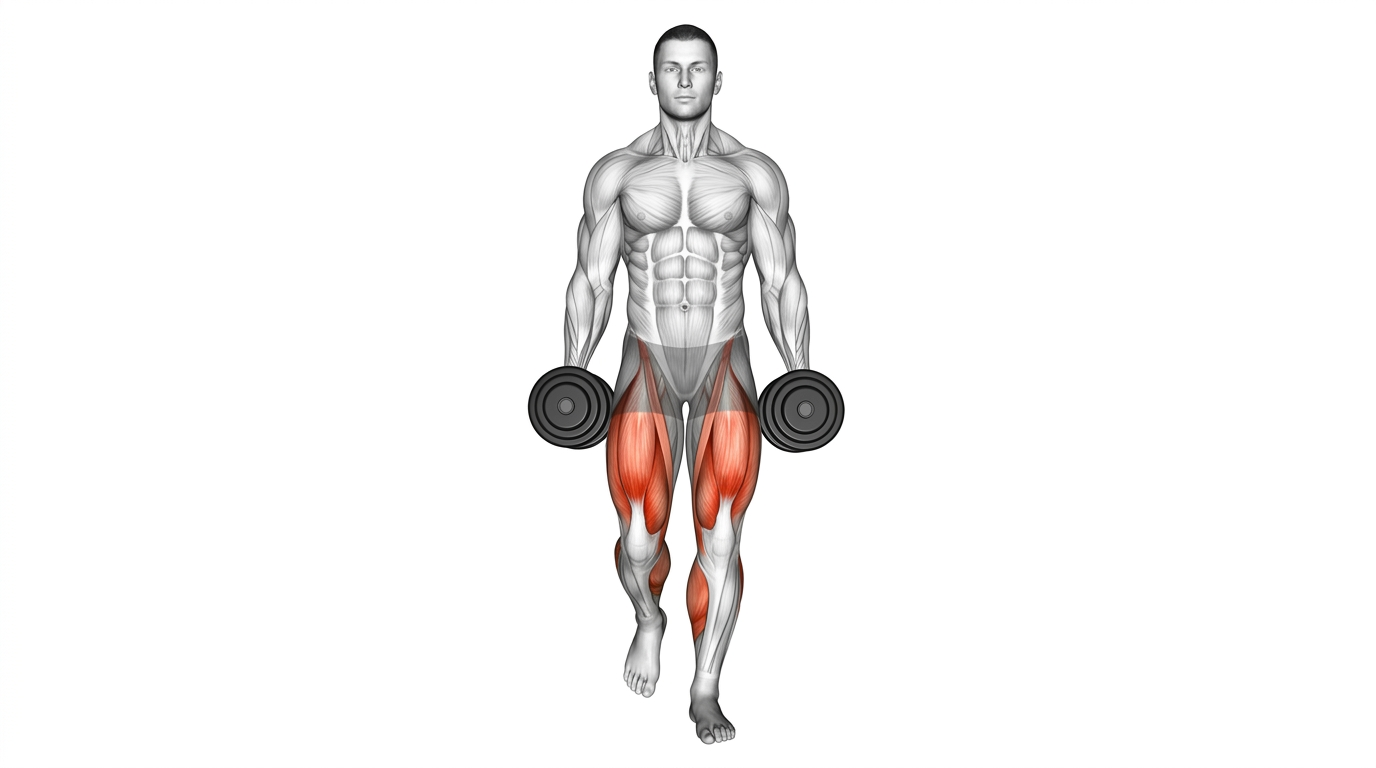
Hold a kettlebell in each hand at your sides, stand tall, and walk forward with slow, controlled steps. Keep your shoulders pulled back, your core braced, and your gaze forward throughout the carry.
This simple movement strengthens the grip, forearms, traps, core, and legs while improving posture and overall stability. Avoid leaning to one side or rushing your pace.
Walk for 30 to 60 seconds or 20 to 40 meters, rest briefly, and repeat for 3 to 4 rounds depending on your fitness level and training goals.
Joe Rogan's Training Philosophy
One thing that separates Rogan's approach from a lot of fitness advice is what he does not do. He does not train to failure. He keeps every rep clean and controlled, uses planned rest between sets, and prioritizes movement quality over heavy loads.
This approach is influenced by the StrongFirst philosophy, developed by Pavel Tsatsouline, which focuses on building strength without grinding yourself down.
Rogan uses a 70-pound kettlebell for his swings and clean and presses, but drops to a lighter weight for windmills to protect his range of motion. A good beginner starting point is 25 to 35 pounds, and most intermediate trainees do well with 45 to 55 pounds.
Sample Joe Rogan Kettlebell Workout Plan
Use this sample workout to combine strength, power, and conditioning into one efficient full-body kettlebell session. Start with the bodyweight warm-up before moving through the main exercises.
| Exercise | Sets | Reps |
| Deep Squats (warm-up) | 2-3 | 20 |
| Push-Ups (warm-up) | 2-3 | 20 |
| One-Arm Kettlebell Swing | 3 | 10 each side |
| Clean and Press | 3 | 10 each side |
| Kettlebell Windmill | 3 | 10 each side |
| Renegade Row (with push-up) | 3 | 10 each side |
| Goblet Squat | 3 | 10-12 |
| Turkish Get-Up | 3 | 3-5 each side |
| Farmer's Carry | 3 | 30-60 seconds |
Benefits of the Joe Rogan Kettlebell Workout
The Joe Rogan kettlebell workout offers a balanced mix of strength, power, endurance, and functional fitness in one training session.
- Builds full-body strength: Compound kettlebell exercises train your upper body, lower body, and core at the same time.
- Improves conditioning: High-repetition movements increase your heart rate and boost muscular and cardiovascular endurance.
- Increases grip strength: Holding and controlling kettlebells strengthens your hands, wrists, and forearms for better overall performance.
- Develops explosive power: Dynamic exercises like swings and snatches improve hip drive, speed, and athletic movement that directly supports martial arts and grappling.
- Supports mobility and stability: Movements like the windmill and Turkish get-up improve joint mobility, balance, coordination, and core control in ways traditional exercises cannot match.
- Saves time: Full-body kettlebell workouts train multiple fitness qualities in a single session, making them ideal for busy schedules.
Conclusion
If you're thinking about trying the Joe Rogan kettlebell workout, remember that good technique matters more than lifting the heaviest weight.
I've found that focusing on smooth, controlled movements makes workouts feel more effective and enjoyable. Start with a weight you can handle, stay consistent, and build from there.
Small improvements add up over time. If this guide helped you, leave a comment with your favorite kettlebell exercise, share it with a friend, or try our other kettlebell and strength training guides.
Frequently Asked Questions
Is the Joe Rogan kettlebell workout good for beginners?
Yes, beginners can follow it by choosing lighter kettlebells and learning proper form before increasing weight or workout volume.
Start with the two-arm swing before progressing to one-arm swings, and treat windmills as a skill to develop slowly.
How many days a week should I do the Joe Rogan kettlebell workout?
Most people can perform it 2 to 3 times per week, depending on their fitness level and recovery between sessions. Rogan spaces his sessions with at least one day of rest in between.
What size kettlebell should I start with?
Beginners often do well starting around 25 to 35 pounds. Rogan trains with a 70-pound kettlebell for swings and cleans but drops weight for windmills.
Choose a weight that lets you complete every exercise with good form.
Can the Joe Rogan kettlebell workout help build muscle?
Yes. The routine combines compound movements that support muscle growth while also improving strength and conditioning.
How long does the Joe Rogan kettlebell workout take?
A complete workout usually takes 30 to 45 minutes, depending on the number of exercises, rest periods, and training intensity.
Should I train to failure with this routine?
No. Rogan is clear on this point. Keep every rep clean and controlled. Training to failure taxes your body too much and increases the risk of injury, especially with technical movements like windmills and snatches.