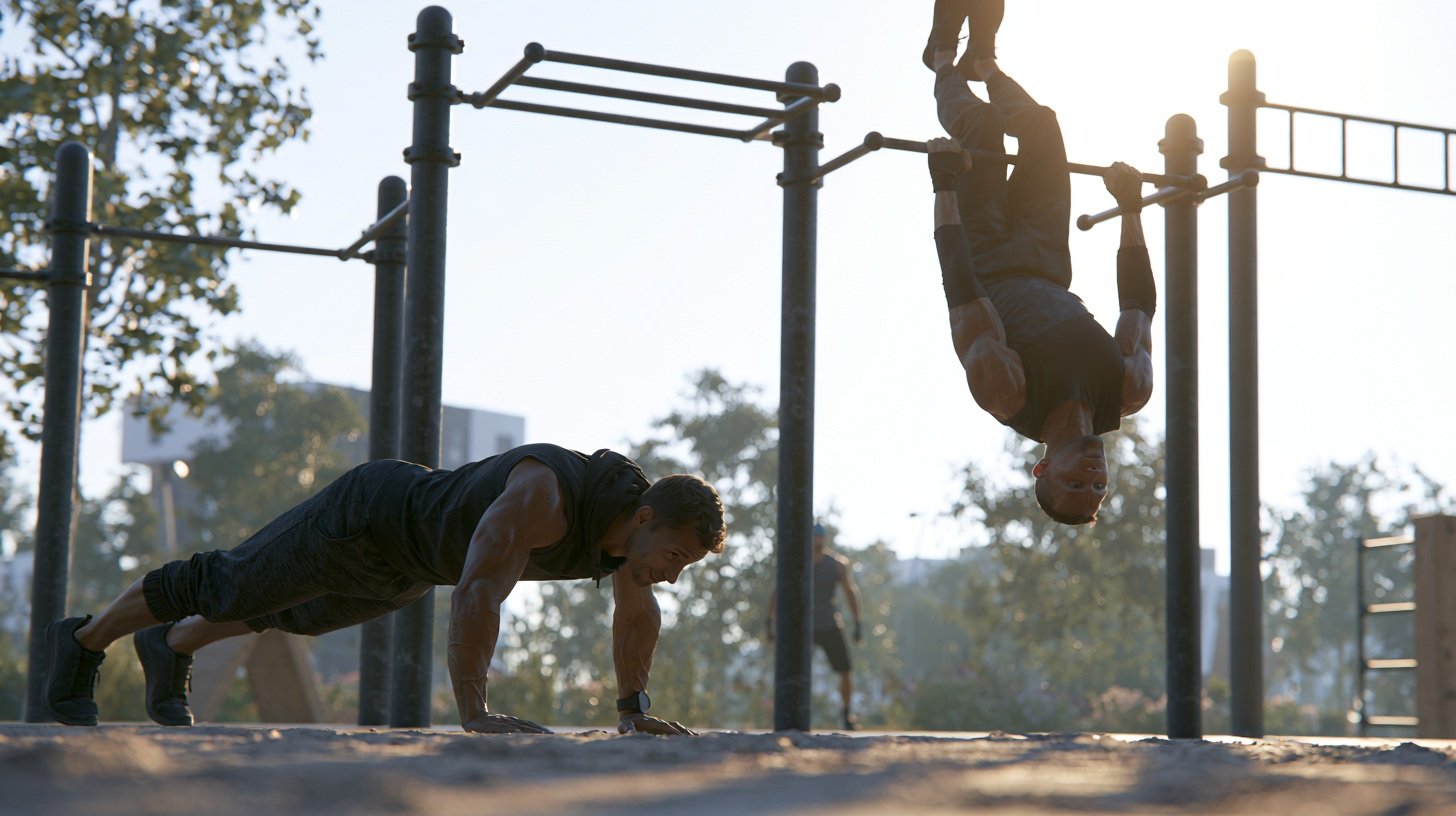
So you want to build real strength with just your body weight? I get it. When I started calisthenics, I had no idea where to begin either. Push-ups felt hard. Pull-ups felt impossible.
This guide breaks down calisthenics progressions from beginner to advanced, one step at a time. You will learn the best exercises for push-ups, pull-ups, squats, dips, handstands, and muscle-ups.
I have tested these steps myself and used them to help others build strength safely. No confusing jargon. Just simple steps that work.
By the end, you will know exactly what to do this week to get stronger.
What Are Calisthenics Progressions?
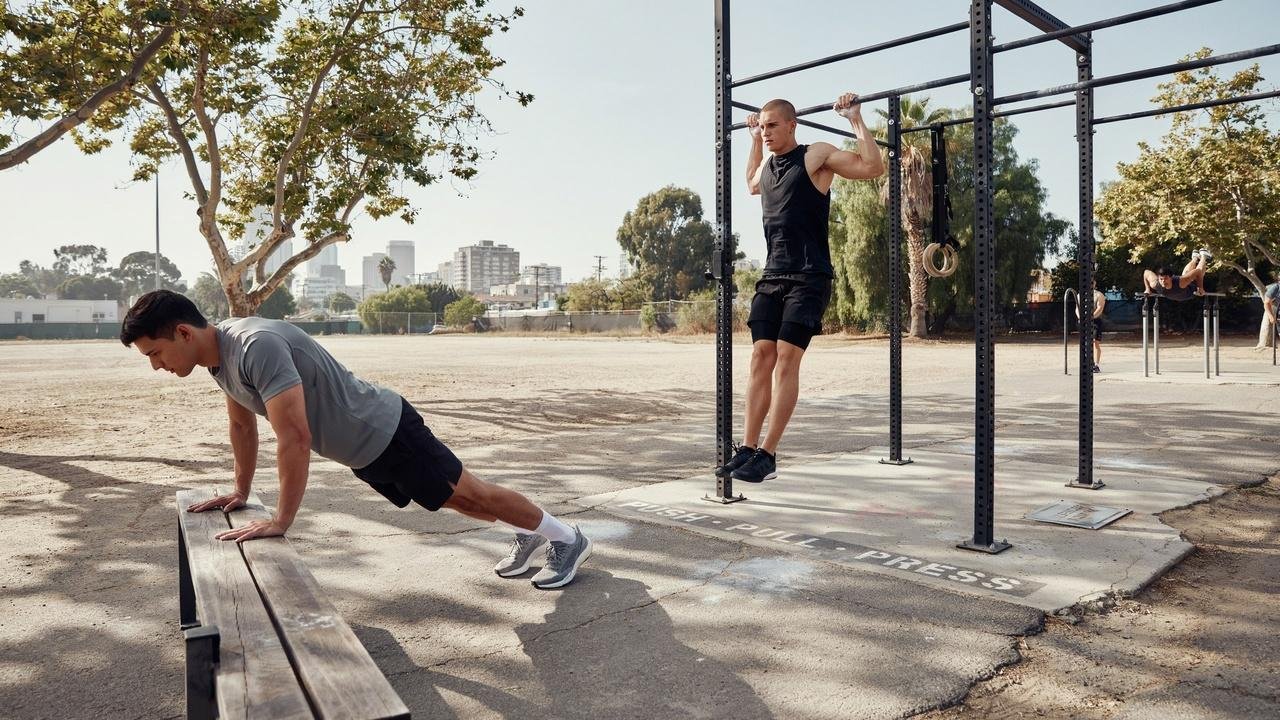
Small, ordered steps that take you from your first push-up to advanced skills.
Calisthenics progressions are a set of exercises arranged from easy to hard. Each step gets you ready for the next one.
You do not jump straight into a handstand push-up. You build the strength, balance, and control first.
This works because of a simple idea called progressive overload. You give your body just enough of a challenge to adapt, then you add a little more once it catches up.
Skip that order and your body has nothing solid to build on.
Think of it like climbing stairs. You cannot skip five steps at once without falling. Your body works the same way. Muscles, joints, and tendons need time to adapt.
This method keeps your training safe and steady. It also gives you clear goals to chase instead of guessing what to do next.
Benefits of Following Calisthenics Progressions
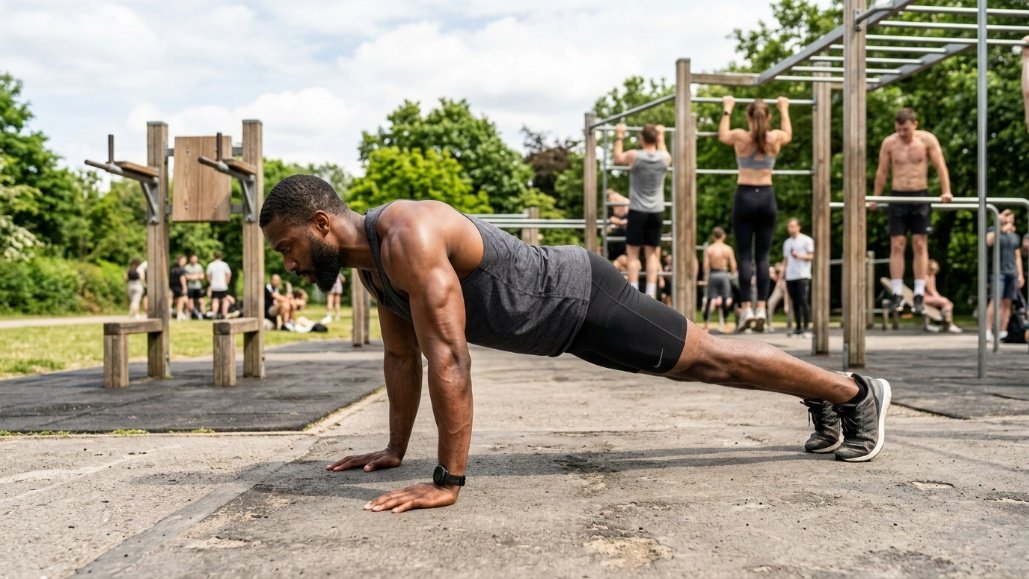
These small steps add up to big strength and fewer setbacks.
Build Strength Safely
Progressions let your muscles and joints adapt slowly over time. You build real strength without pushing your body past what it can handle right now.
This steady approach also keeps your motivation high, since every step feels doable instead of scary.
Improve Balance, Control, and Mobility
Bodyweight training forces you to control your own movement at every angle. This sharpens your balance and keeps your joints moving freely through their full range.
Over time, this control carries over into daily life, sports, and better posture too. Better functional strength shows up outside the gym just as much as in it.
Reduce Injury Risk
Skipping steps is where most injuries happen, especially around the shoulders and wrists. Following a clear path keeps stress on your body manageable and safe.
Your connective tissue, meaning your tendons and ligaments, adapts much slower than your muscles do.
Give it time and you avoid the flare-ups that come from rushing. Strong scapular control, or a stable shoulder blade under load, also protects your shoulders as the moves get harder.
It also means less time off training and more steady progress week after week.
Step-by-Step Calisthenics Progressions
Here is the exact order to follow from day one to advanced moves.
Step 1: Build Your Foundation

Start with basic mobility work and light bodyweight moves. Focus on posture and breathing before adding any hard exercises.
This stage sets up your joints and muscles so later steps feel easier and safer.
Step 2: Master the Basic Movements

Learn proper push-ups, squats, and rows with clean form. Get your technique right here before you move on to anything harder.
Good habits at this stage save you from bad form later, when the moves get tougher.
Step 3: Develop Intermediate Strength
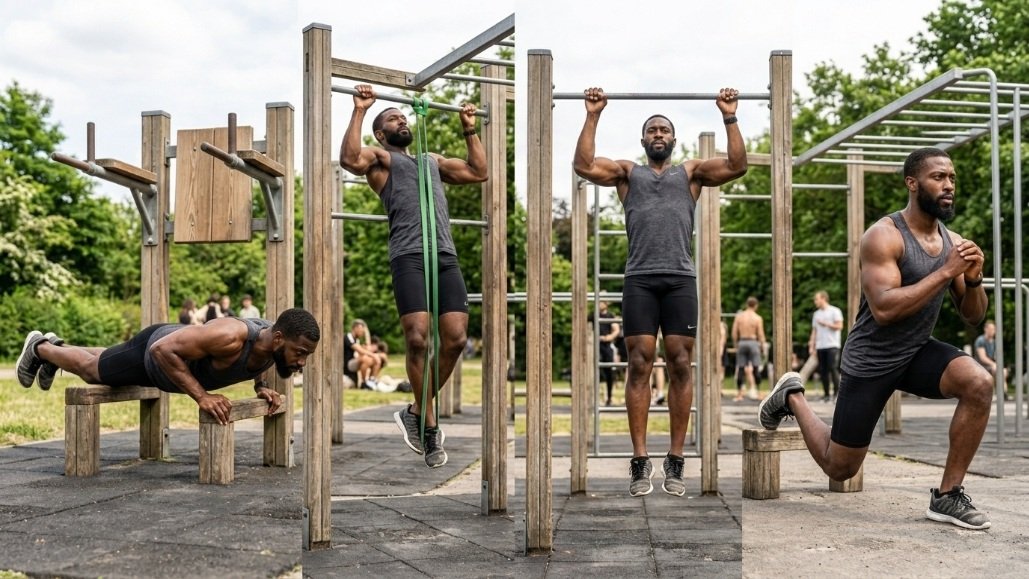
Add variations like decline push-ups, negative pull-ups, and assisted pull-ups to build more raw strength. Your strength should feel steady, not shaky, before moving forward.
Give each variation a few weeks before adding the next layer of difficulty.
Step 4: Build Straight-Arm Strength and Body Control

Work on planche leans, German hangs, and hollow body holds to train your core and shoulders. These moves build the strength advanced skills need later on.
This step often takes patience, since straight-arm strength grows slower than bent-arm strength. Your tendons need that extra time too.
Step 5: Learn Advanced Calisthenics Skills

Try skills like muscle-ups, front levers, and handstand push-ups once you feel ready. Only attempt these once your foundation feels solid and controlled.
Go slow here and respect your body's signals, since advanced moves carry more risk.
Step 6: Create a Weekly Training Plan

Spread your workouts across the week with rest days included. Balance push, pull, and leg movements evenly across your sessions.
A clear plan keeps you consistent and stops you from overtraining one muscle group.
Step 7: Progress to the Next Level Safely

Increase difficulty only when the current step feels easy and controlled. Rushing this step is where most people get hurt.
Patience here pays off, since steady progress beats fast progress that leads to setbacks.
Best Calisthenics Progressions for Key Exercises
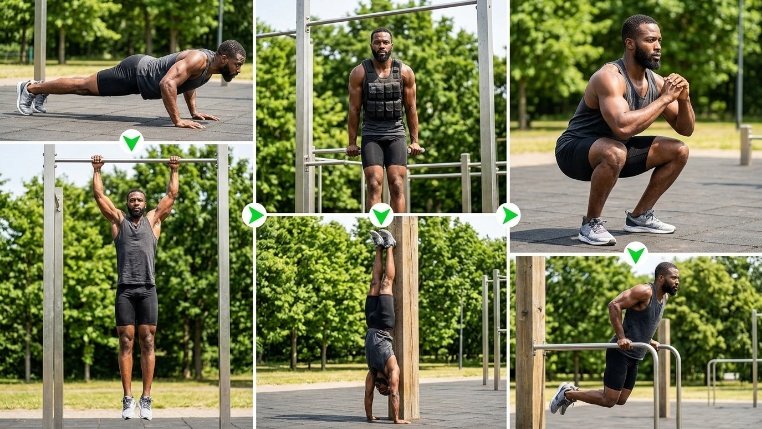
Every major movement has its own path from easy to advanced.
Push-Up Progression
Start with wall push-ups, then move to incline, knee, and full push-ups. Finish with archer or one-arm variations once your strength allows it.
Each stage builds the shoulder and core strength needed for the next harder version.
Pull-Up Progression
Begin with dead hangs and negative pulls to build grip and back strength. Add band-assisted pull-ups before attempting full pull-ups and weighted versions.
Once pull-ups feel solid, a front lever is a natural next goal for pulling strength. Grip strength often takes longer to build, so be patient with this progression.
Squat Progression
Start with chair squats, then move to bodyweight squats with full range. Move to Bulgarian split squats and finally pistol squats as balance improves.
Mobility in your ankles and hips plays a big role in how fast you progress here.
Dip Progression
Use bench dips first, then assisted dips on parallel bars to build shoulder strength. Build up to full dips and weighted dips over time.
Keep your shoulders pulled back and down throughout to protect your joints.
Handstand Progression
Practice wall walks and wall-supported holds to build shoulder and core strength. Add German hangs on rest days to keep your shoulders loose and ready. Slowly work toward freestanding handstands with regular, patient practice.
Balance takes the longest to develop here, so daily short sessions help more than long, rare ones.
Muscle-Up Progression
Master pull-ups and dips separately first before combining them. Then combine them slowly with strict form to avoid shoulder strain.
The transition part of the muscle-up is tricky, so practice it slowly with control.
Sample Weekly Calisthenics Progression Plan

A simple weekly split keeps your training organized and balanced.
Beginner Weekly Plan
Train three days a week with full-body sessions covering push, pull, and legs. Focus on form, light reps, and short rest between sets.
Leave a full rest day between sessions so your body can recover properly.
Intermediate Weekly Plan
Split training into push, pull, and leg days across the week. Add mobility work on rest days to keep joints loose and ready.
This split lets you focus more on each muscle group without overloading any single day.
Advanced Weekly Plan
Train five to six days with dedicated skill work built into your week. Balance heavy strength days with lighter technique-focused sessions.
Recovery matters even more here, so track fatigue and adjust volume when needed.
Common Mistakes That Slow Your Progress
Small errors like these can slow you down for months.
- Skipping prerequisite exercises before moving to harder moves
- Progressing too quickly without solid form
- Ignoring recovery and mobility work between sessions
- Using poor technique that limits real strength gains
- Losing scapular control under load, especially on push and dip work
- Comparing your pace to someone else's progress
How to Know When You're Ready to Move On
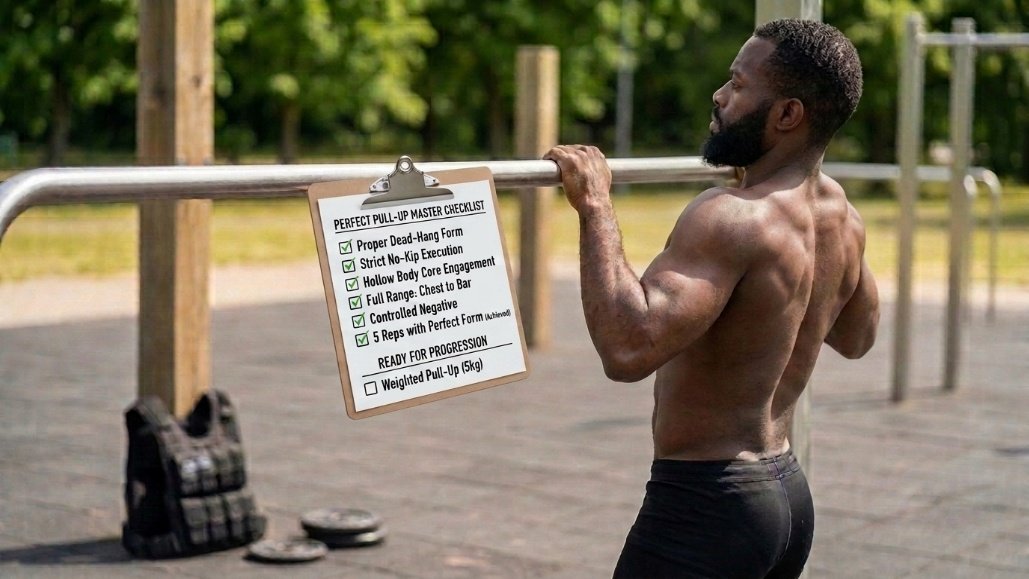
A simple gut check before you jump to the next step.
A lot of people ask me how they know when to move forward. The answer is simple.
If you can do the current exercise with clean form for the target reps, and it does not feel shaky or rushed, you are ready.
Do not move on just because you are bored or impatient. Your joints and tendons adapt slower than your muscles, so give them time too.
A good rule is to hold steady form for at least two weeks before adding difficulty. This keeps your progress steady and your risk of injury low.
Tips to Progress Faster and Stay Injury-Free
These simple habits make a real difference over time.
- Increase difficulty gradually, one small step at a time. This is progressive overload in action.
- Track your progress with a simple workout log
- Prioritize recovery with sleep, stretching, and rest days
- Stay consistent even on days you feel unmotivated
- Listen to your body and adjust when something feels off
Conclusion
A quick, honest note before you go start your own progress.
If you made it this far, you already have what it takes. I remember struggling with my first pull-up for months. Then one day, it just clicked.
Calisthenics progressions work because they respect your pace. Stick with the steps, trust the process, and your strength will follow.
Try one step this week. Then tell me how it goes in the comments. If this helped you, share it with someone starting their own calisthenics path.
Frequently Asked Questions
Quick answers to the questions people ask most about calisthenics progressions.
How long does it take to go from beginner to advanced calisthenics?
Most people need six months to two years, depending on consistency. Progress depends on your starting point and training frequency.
Can I do calisthenics progressions without any equipment?
Yes, most progressions only need your body weight. A pull-up bar helps later, but early steps need nothing at all.
How often should I train calisthenics progressions each week?
Beginners should train three times a week. Intermediate and advanced trainees can train four to six days weekly.
What should I do if a progression feels too hard?
Go back one step and build more strength there. Rushing forward too soon often leads to injury or burnout.
Are calisthenics progressions good for building muscle?
Yes, they build lean muscle and functional strength. Combined with good nutrition, they work well for muscle growth.