I've trained my shoulders with dumbbells for years. Then I switched to cables, and the difference was obvious fast.
Cable shoulder workouts keep tension on your muscles the entire time. That's something free weights can't always do.
If you've been stuck with flat, underdeveloped shoulders, this is worth your attention.
In this article, I'll cover 11 of the best cable shoulder exercises, the muscles they target, how to do them right, and tips to get real results.
You'll leave knowing exactly what to do next time you hit the cable machine.
Let's get into it.
Why Cable Shoulder Workouts Are Effective
Cables give your shoulders something dumbbells often miss: constant tension throughout the full range of motion. When you lift a dumbbell laterally, tension drops at the top.
With cables, it stays. That steady pull forces your deltoids to work harder, which leads to better muscle activation and growth over time.Cables also let you adjust the pulley height easily, so you can hit the anterior, lateral, and posterior deltoid heads without switching equipment.
When the pulley sits low, you get a different line of pull than when it's set at mid or chest height. That small change makes a big difference in which part of your delt takes the load.
They're also easier on the joints, making them a solid pick for anyone dealing with shoulder sensitivity.
List of 11 Best Cable Shoulder Workouts
Here are the top cable shoulder exercises ranked by effectiveness and versatility.
1. Cable Shoulder Press
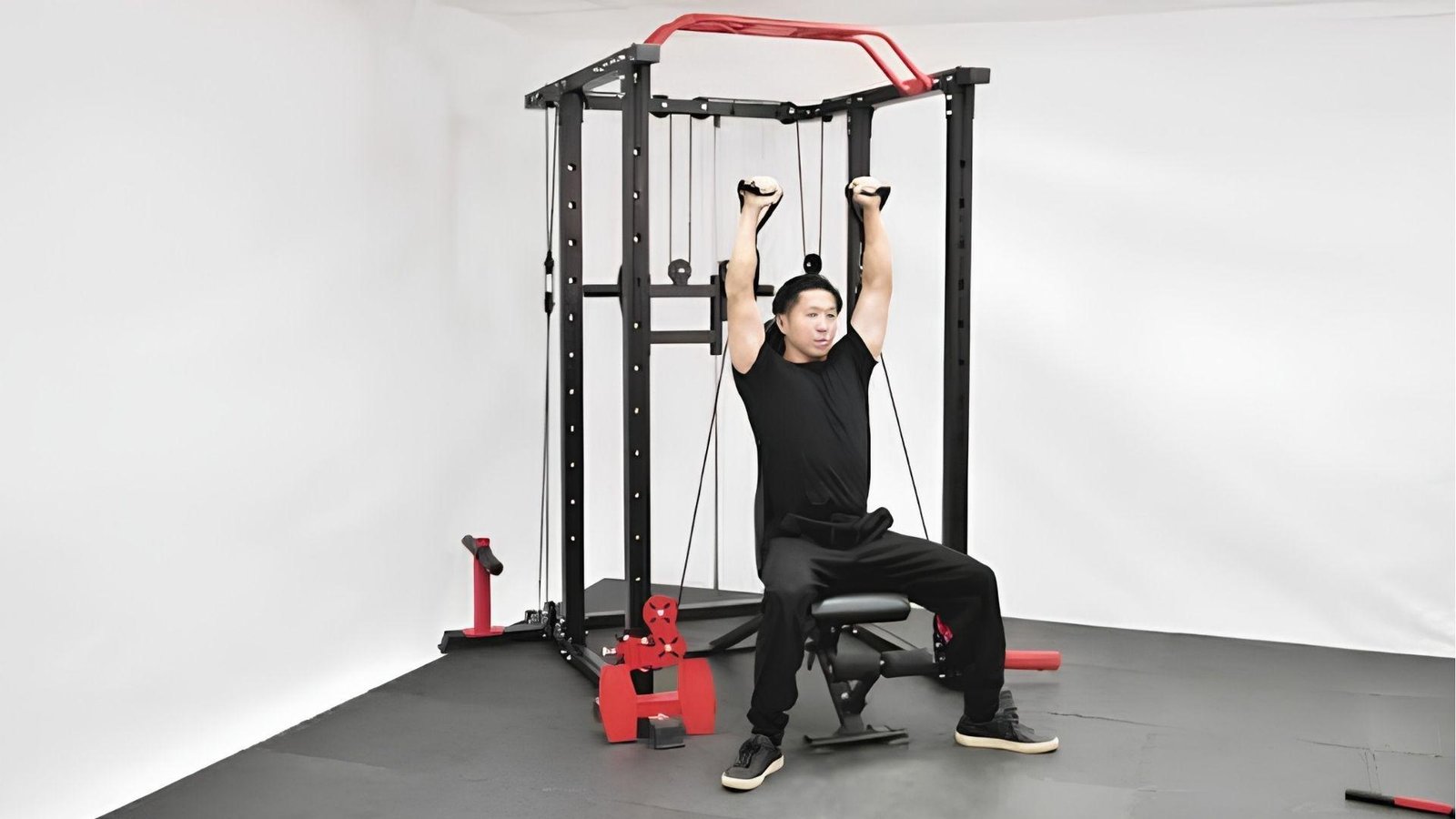
The cable shoulder press works your anterior deltoid, lateral deltoid, triceps, serratus anterior, and upper trapezius. The cable keeps resistance constant from start to finish, making your deltoids work harder than a standard dumbbell press.
To do it, set the pulleys to the lowest position, hold the D-handles at shoulder height, press straight up until your arms are fully extended, then lower slowly.
Aim for 3 to 4 sets of 8 to 12 reps. If you're just starting out, use lighter weight and reduce the range of motion slightly until you build shoulder stability.
One key tip: don't let your elbows flare out too wide. Keep them slightly in front of your body to protect the shoulder joint.
2. Cable Lateral Raise
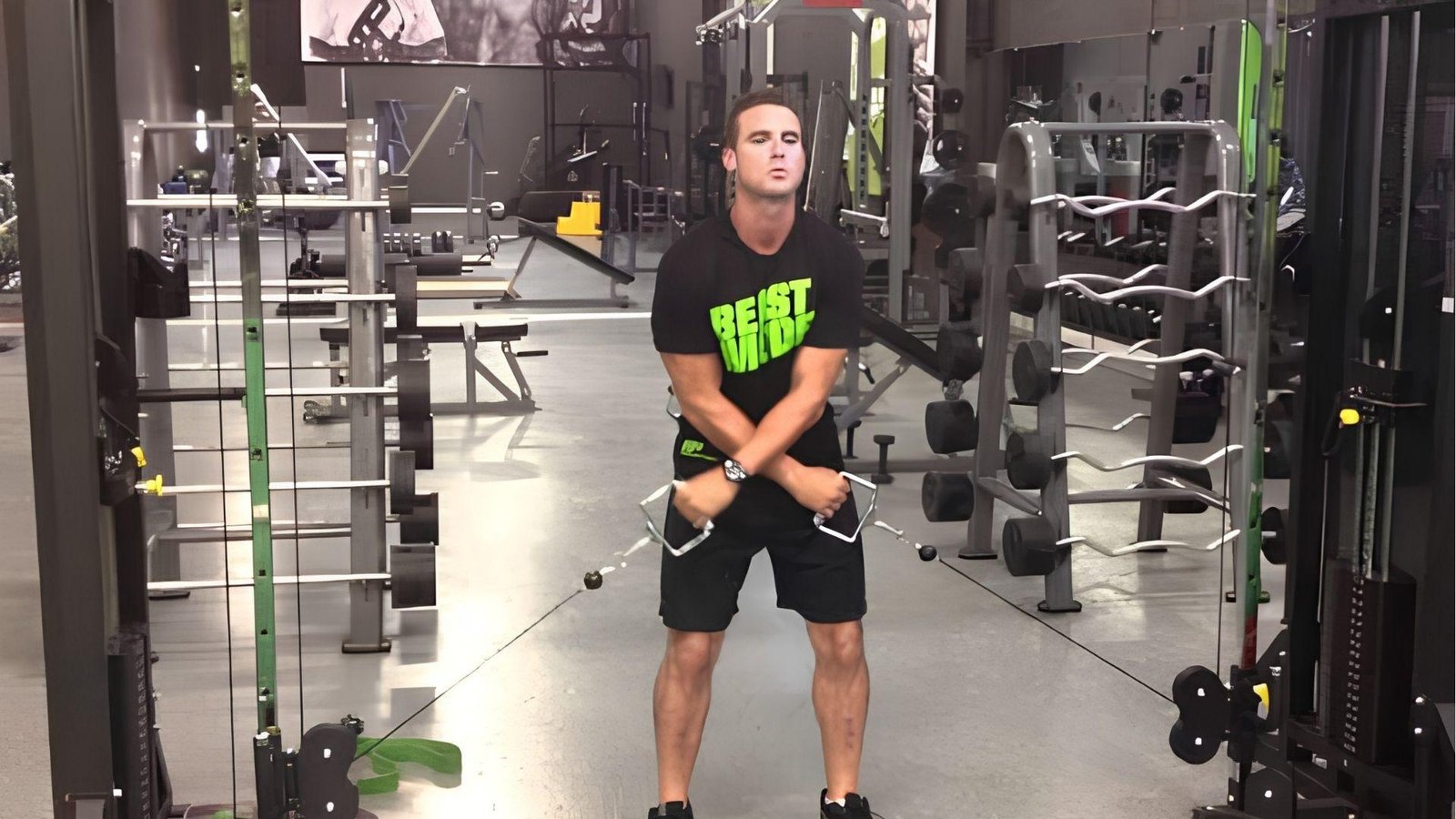
This exercise targets your lateral deltoid and supraspinatus. Unlike dumbbell lateral raises, cables maintain tension at the bottom of the movement where dumbbells go slack.
Stand sideways to the cable machine, set the pulley low, hold the D-handle with the hand farthest from the machine, raise your arm out to the side to shoulder height, then lower slowly.
Do 3 sets of 12 to 15 reps per side. Beginners should use very light weight and focus on keeping the movement controlled and pain-free.
Lead with your elbow, not your wrist. That one shift keeps the lateral delt doing most of the work.
3. Single-Arm Cable Front Raise
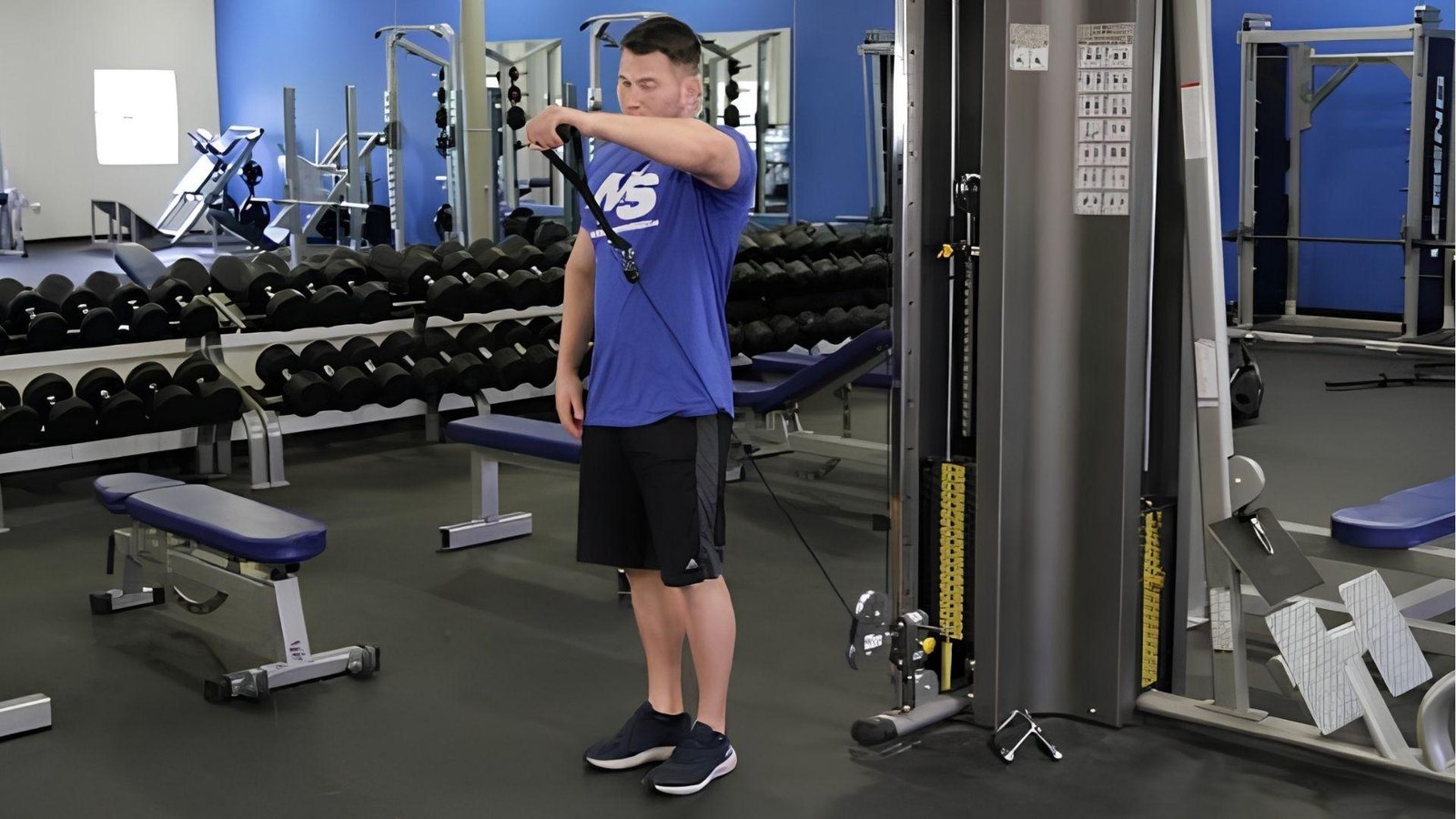
This move hits the anterior deltoid and upper chest as a secondary muscle. It isolates the front delt without letting the stronger side compensate, which fixes muscle imbalances over time.
Stand facing away from the cable machine, set the pulley low, hold the handle with one hand, raise your arm straight in front of you to shoulder height, then lower with control. Do 3 sets of 10 to 12 reps per arm. If you need help with balance, hold the machine with your free hand.
The key thing to remember: don't swing your torso. If you're leaning back to lift the weight, go lighter. Focus on the mind-muscle connection here. Thinking about the front delt contracting as you lift makes a real difference in how much the muscle actually fires.
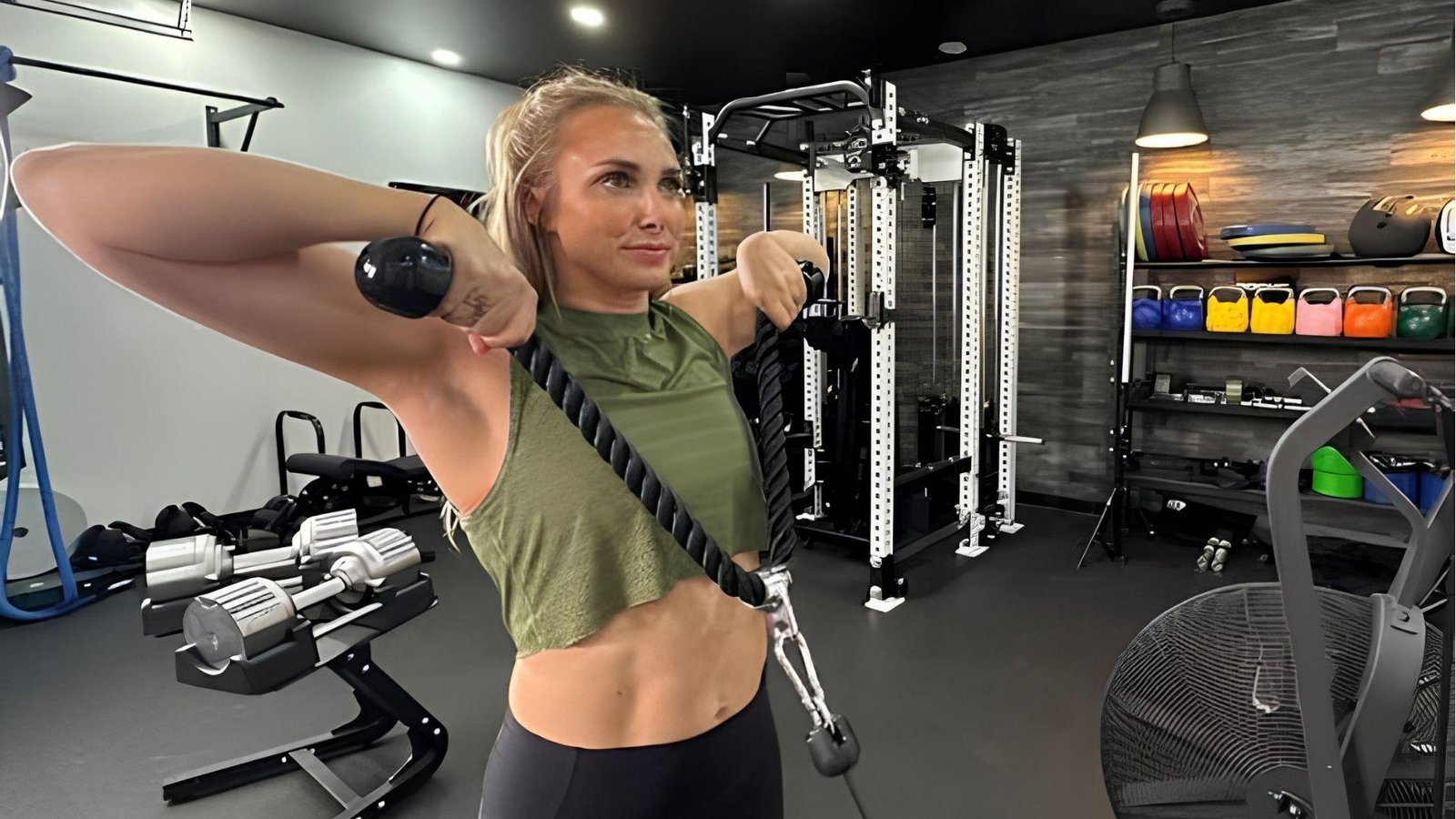
4. Cable Face Pull
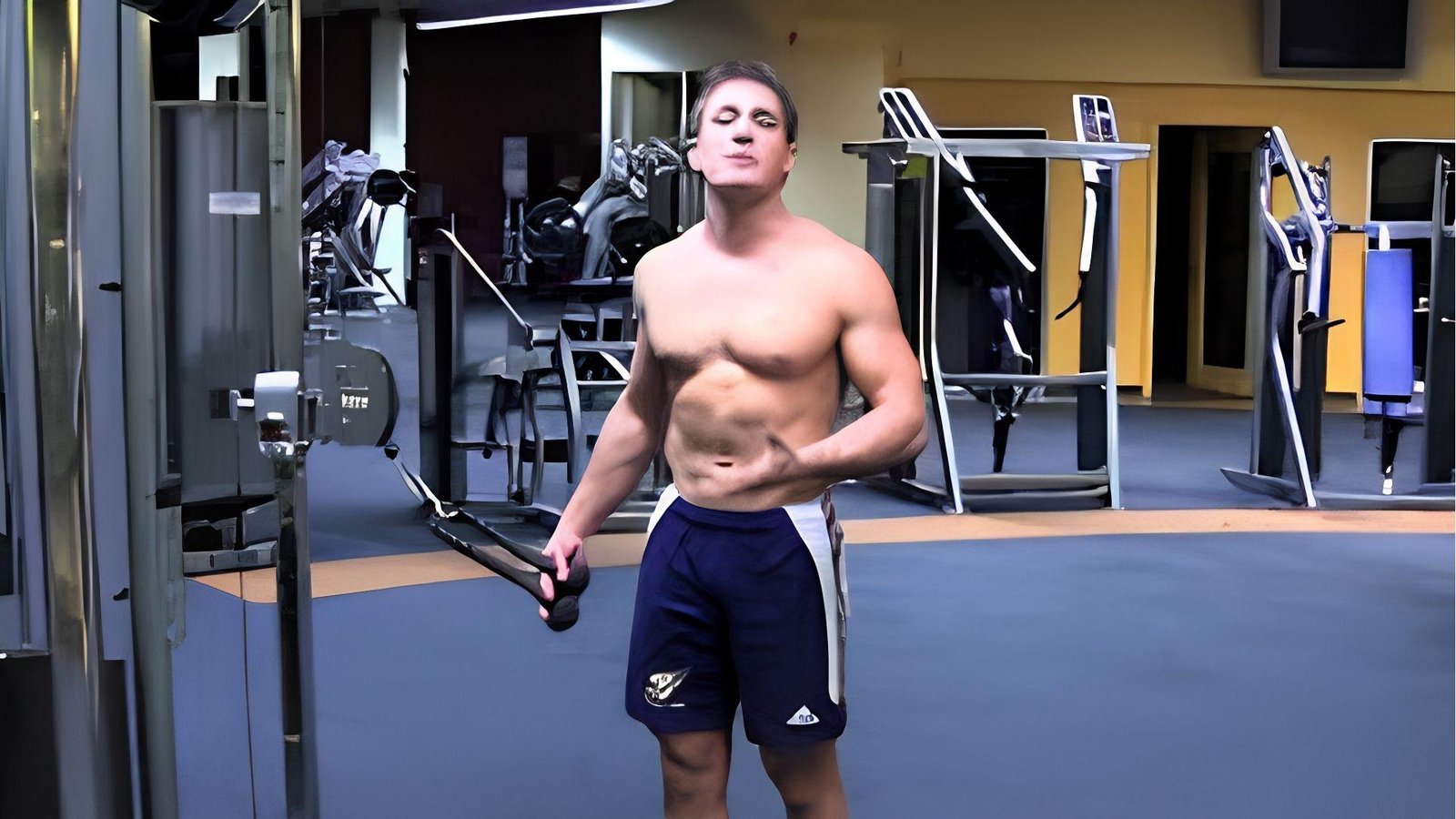
The cable face pull works your posterior deltoid, rotator cuff, trapezius, and rhomboids. Most people overtrain the front delt and neglect the rear. Face pulls fix that and also improve shoulder health and posture.
Set the pulley at upper chest height, use a rope attachment, pull the rope toward your face with your elbows high, then separate your hands at the end and squeeze your rear delts.
Go for 3 to 4 sets of 12 to 15 reps. Beginners should use a lighter load and focus on squeezing the rear delts at the top of each rep.
Keep your elbows above your wrists throughout. If you want more trap involvement, let your shoulder blades retract as you pull and protract as you return. If you want to keep the focus on the rear delt, keep your scapula stable and drive your elbows high and wide.
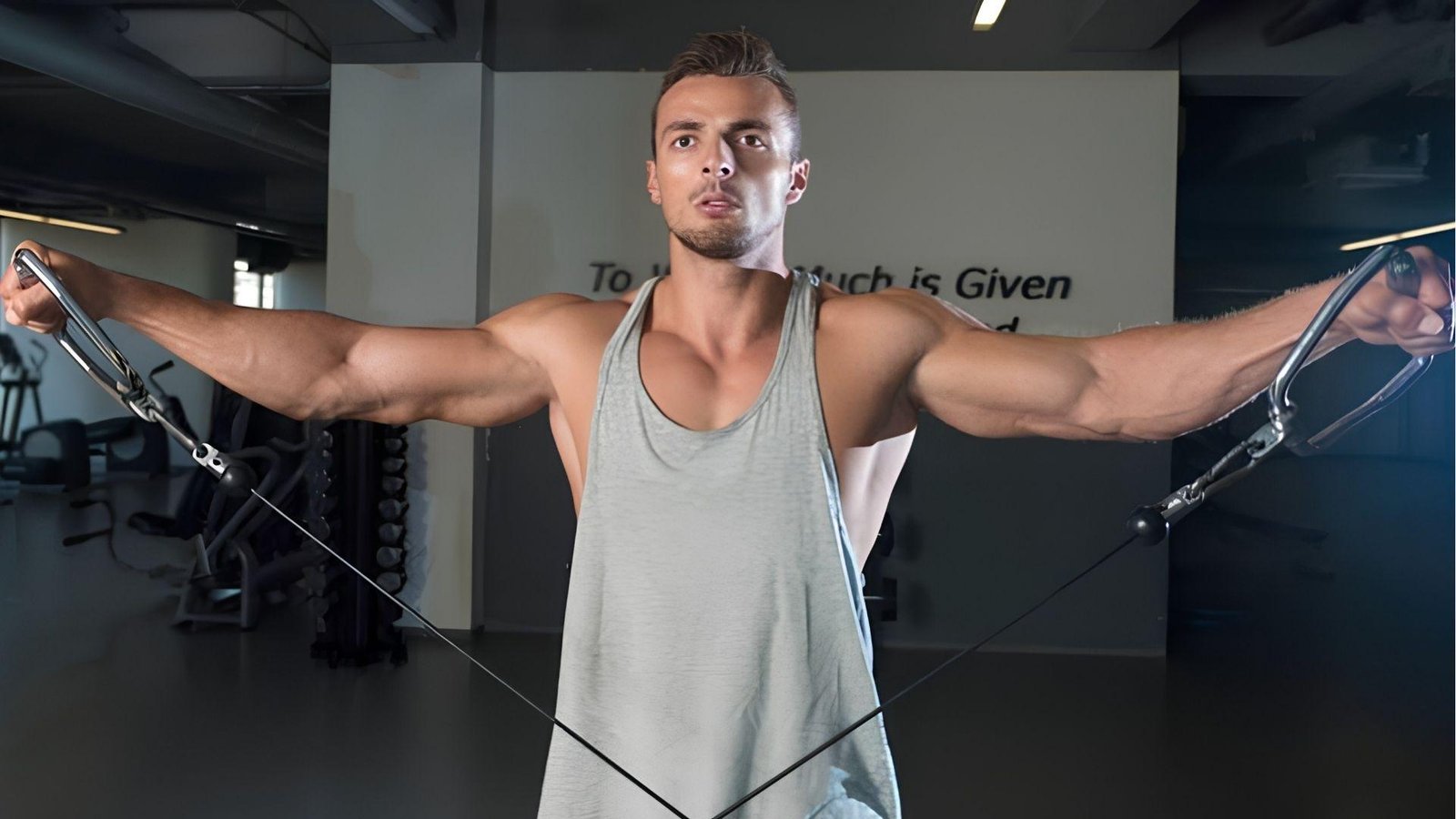
5. Cable Rear Delt Fly
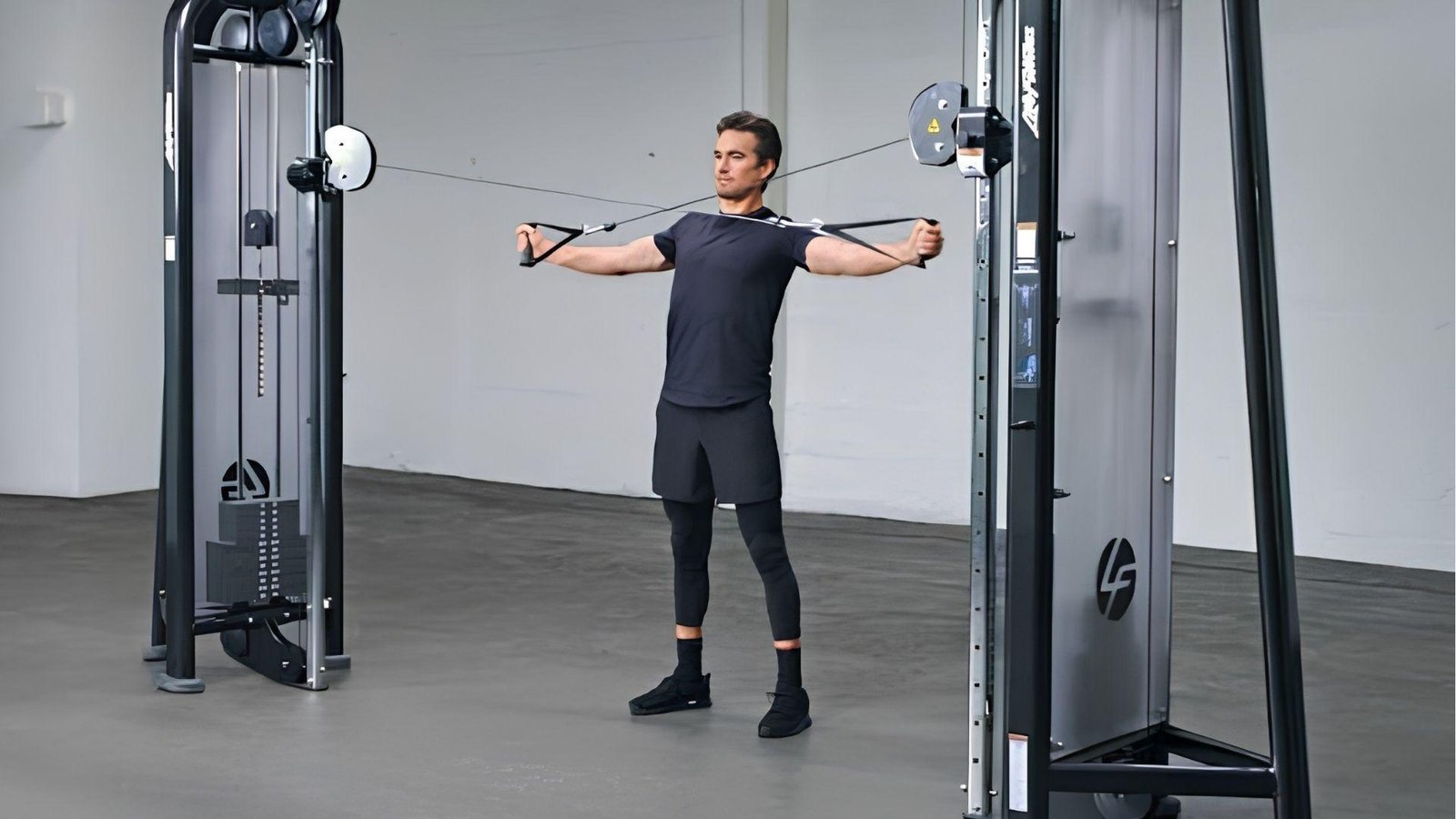
This exercise directly targets the posterior deltoid, rhomboids, and middle trapezius. The rear delts are often the weakest and most underdeveloped part of the shoulder, and this movement fixes that.
Set both pulleys to around eye level, cross the cables, hold the left cable with your right hand and the right cable with your left, then pull your arms apart and back while squeezing your shoulder blades together. Do 3 sets of 12 to 15 reps. Using a lighter load also reduces trap involvement and keeps the focus on the rear delts where it belongs.
Avoid pulling with your arms. Think about pushing your elbows back instead. That shift puts the load where it belongs.
6. Cable Upright Row
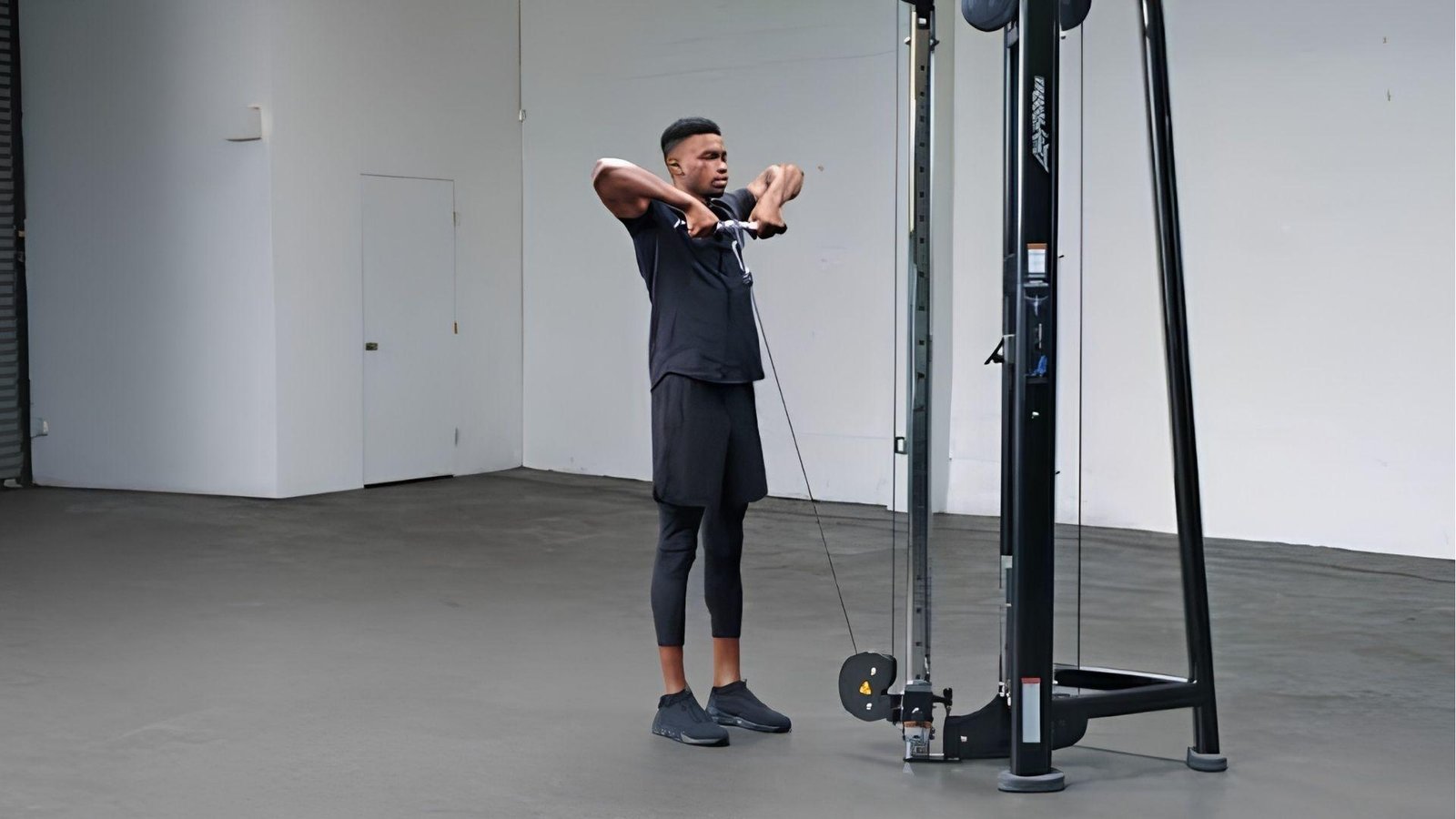
The cable upright row works your lateral deltoid, anterior deltoid, upper trapezius, and biceps. It builds shoulder width and trap thickness at the same time, making it one of the more efficient cable shoulder exercises.
Set the pulley to the lowest position, hold a straight bar or rope attachment with both hands, pull upward along your body until the bar reaches chin height, and keep your elbows higher than your hands throughout. Aim for 3 sets of 10 to 12 reps. If the bar feels awkward on your wrists, switch to a rope attachment for more natural movement.
Don't pull the bar too high. Stopping at chin level reduces the risk of shoulder impingement.
7. Behind-the-Back Cable Lateral Raise
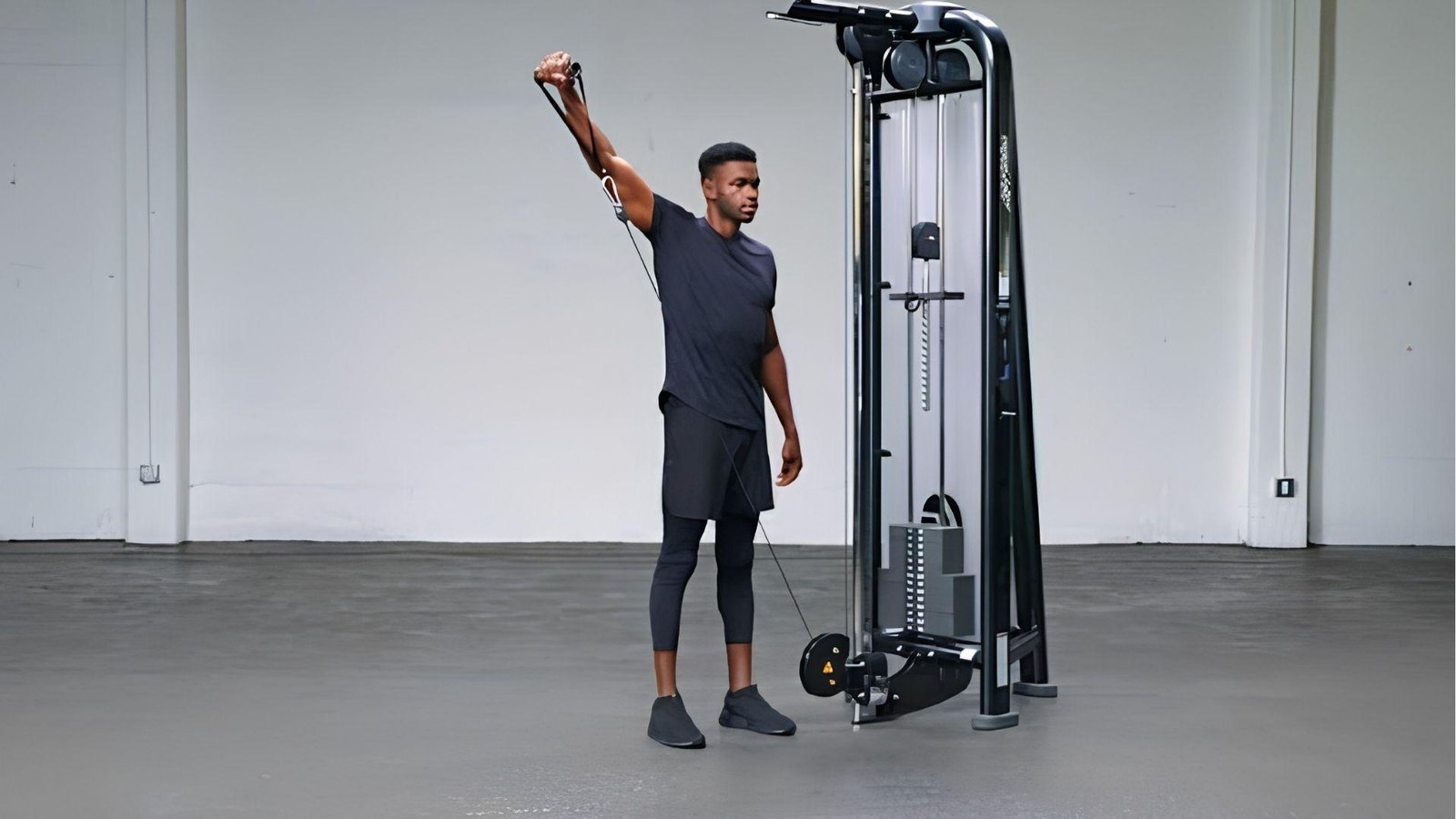
This variation targets your lateral deltoid and posterior deltoid. The behind-the-back angle changes the line of pull, hitting the lateral delt from a slightly different position than a standard lateral raise.
Stand sideways to the cable machine, set the pulley low, reach behind your back with the hand closest to the machine, grab the handle, then raise your arm out to the side to shoulder height. Do 3 sets of 12 to 15 reps per side. Start with very light weight since the angle feels unfamiliar at first.
Keep a slight bend in your elbow throughout the movement. A locked elbow puts unnecessary stress on the joint.
8. Cable Y Raise
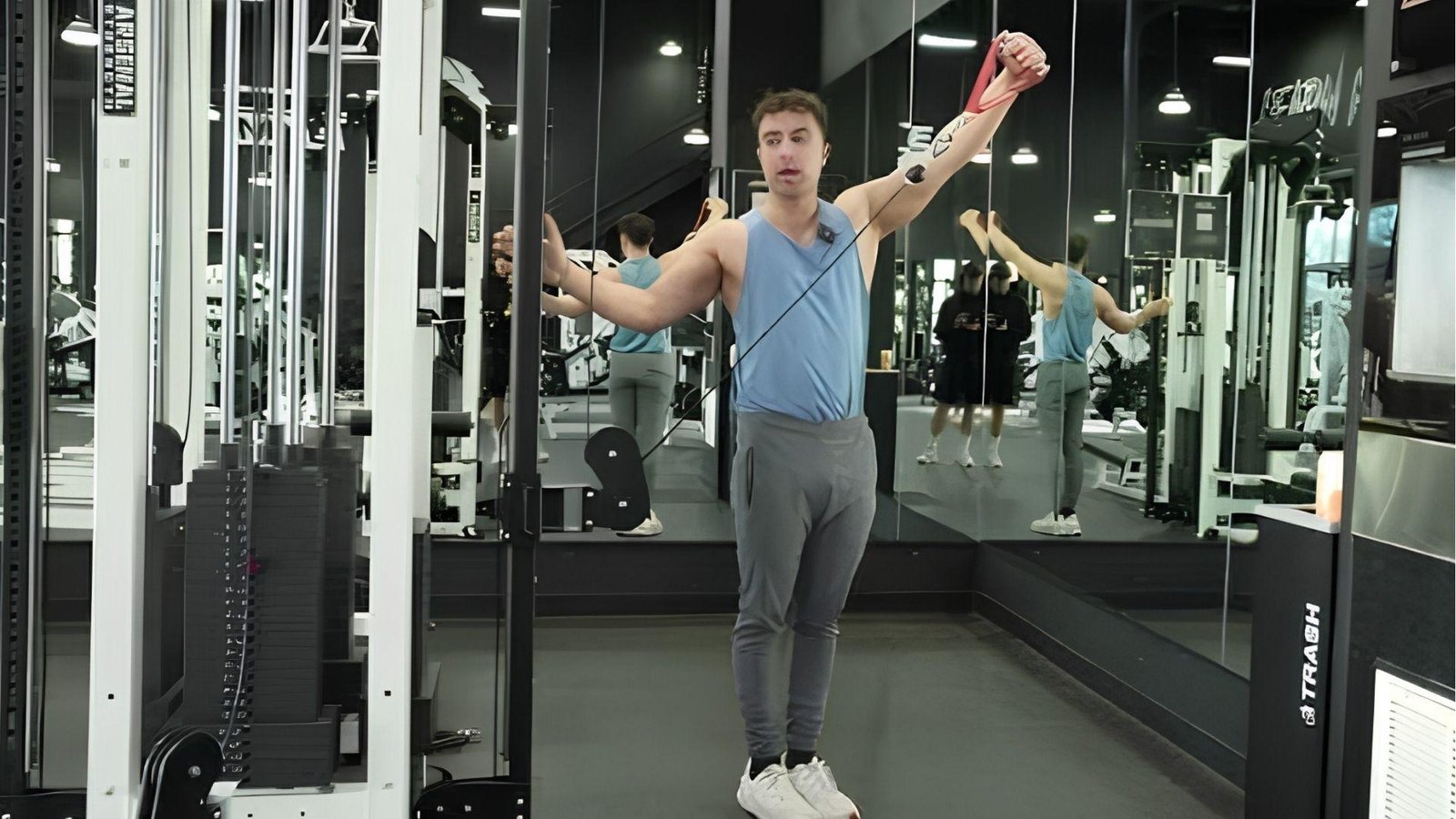
The cable Y raise hits your lower trapezius, posterior deltoid, serratus anterior, and rotator cuff. It targets the stabilizers that most shoulder exercises miss, building the foundation for healthy, strong shoulders.
Set the pulley to the lowest position, hold both handles, lean forward slightly, then raise both arms up and out into a Y shape with thumbs pointing up at the top. Do 3 sets of 12 to 15 reps. Use very light weight since this is a stability and control exercise, not a heavy lift.
As you raise your arms, think about pulling your shoulder blades down and back. That's what activates the lower traps properly.
9. Cable External Rotation
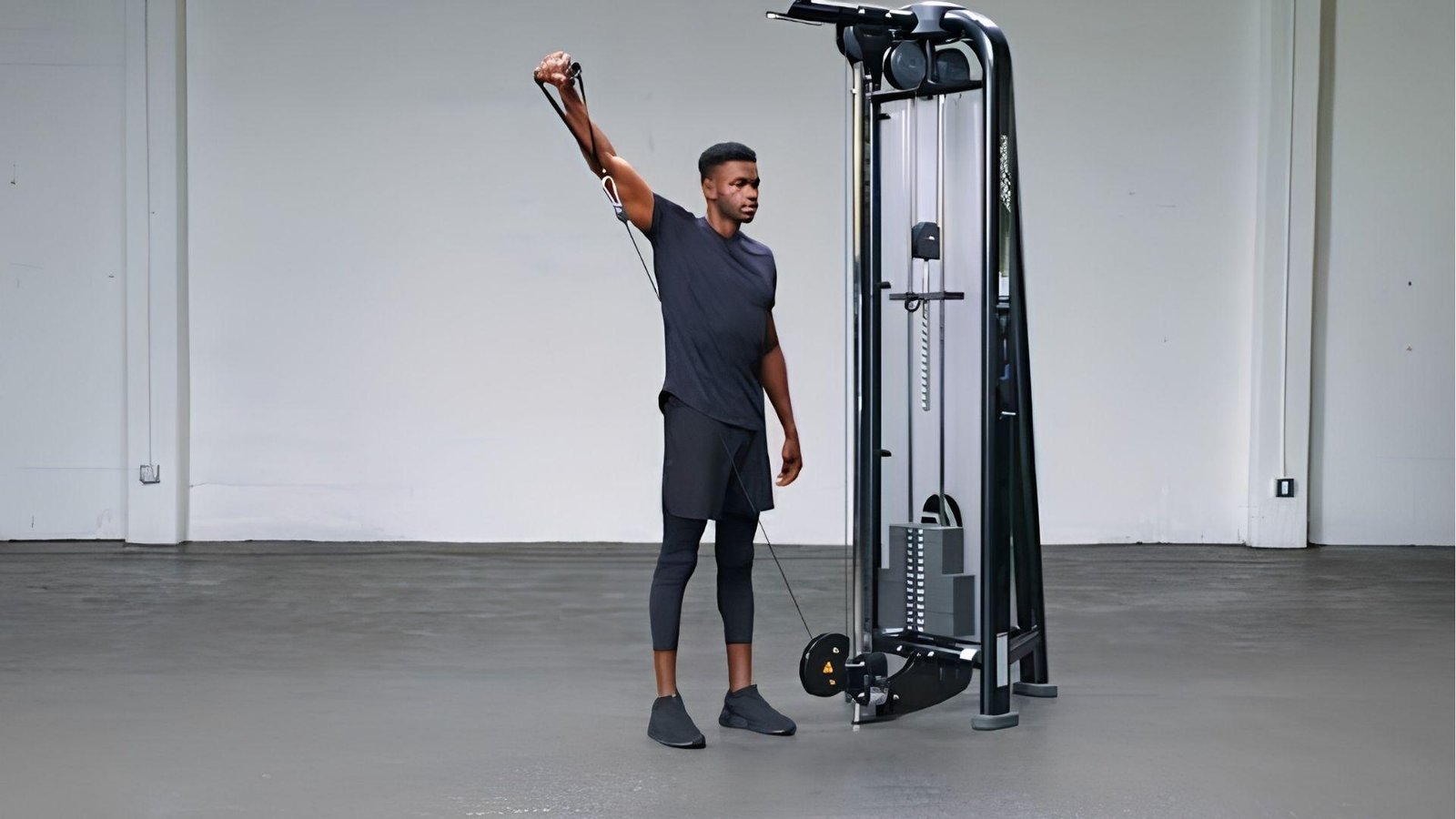
This exercise works your infraspinatus and teres minor, which are part of the rotator cuff. External rotation strengthens the rotator cuff, which protects your shoulder joint during all pressing and lifting movements.
Set the pulley at elbow height, stand sideways, keep your elbow bent at 90 degrees and pressed against your side, then rotate your forearm outward away from your body and return slowly.
Do 3 sets of 15 reps per arm. Use the lightest possible weight since this is a small muscle working in a small movement.
Keep your elbow pinned to your side the entire time. The moment it drifts, you lose the rotator cuff isolation completely.
10. Cable Internal Rotation
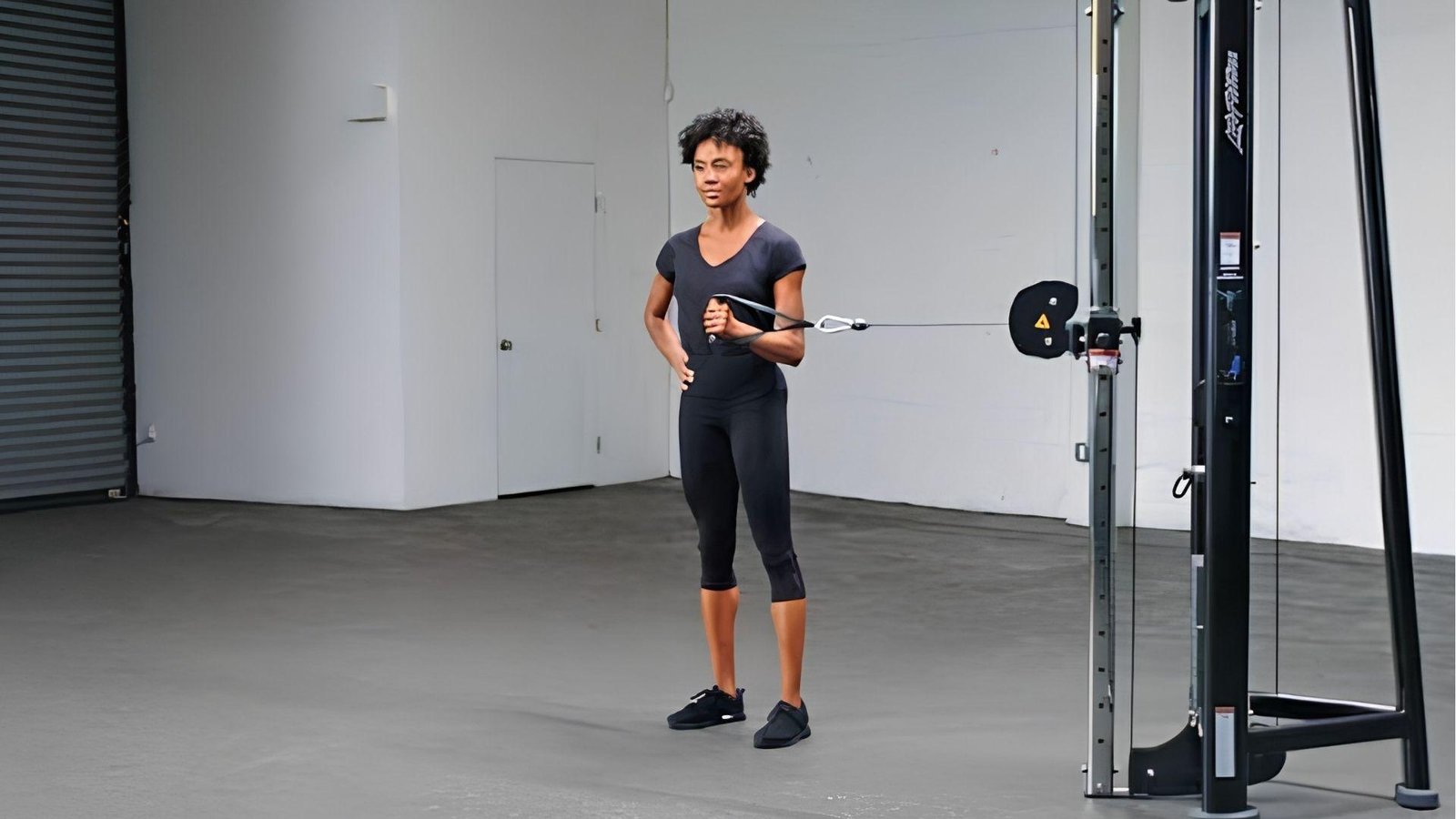
This move targets the subscapularis, which is the largest rotator cuff muscle. Training both internal and external rotation keeps the rotator cuff balanced, which reduces injury risk significantly.
Set the pulley at elbow height, stand sideways, hold the handle with the hand closest to the machine, keep your elbow at 90 degrees, then rotate your forearm inward across your body and return slowly.
Do 3 sets of 15 reps per arm. Start with the lightest weight available and prioritize a smooth, pain-free range of motion before adding load.
Always pair this with external rotation in the same workout. One without the other creates imbalance.
11. Single-Arm Cable Shoulder Press
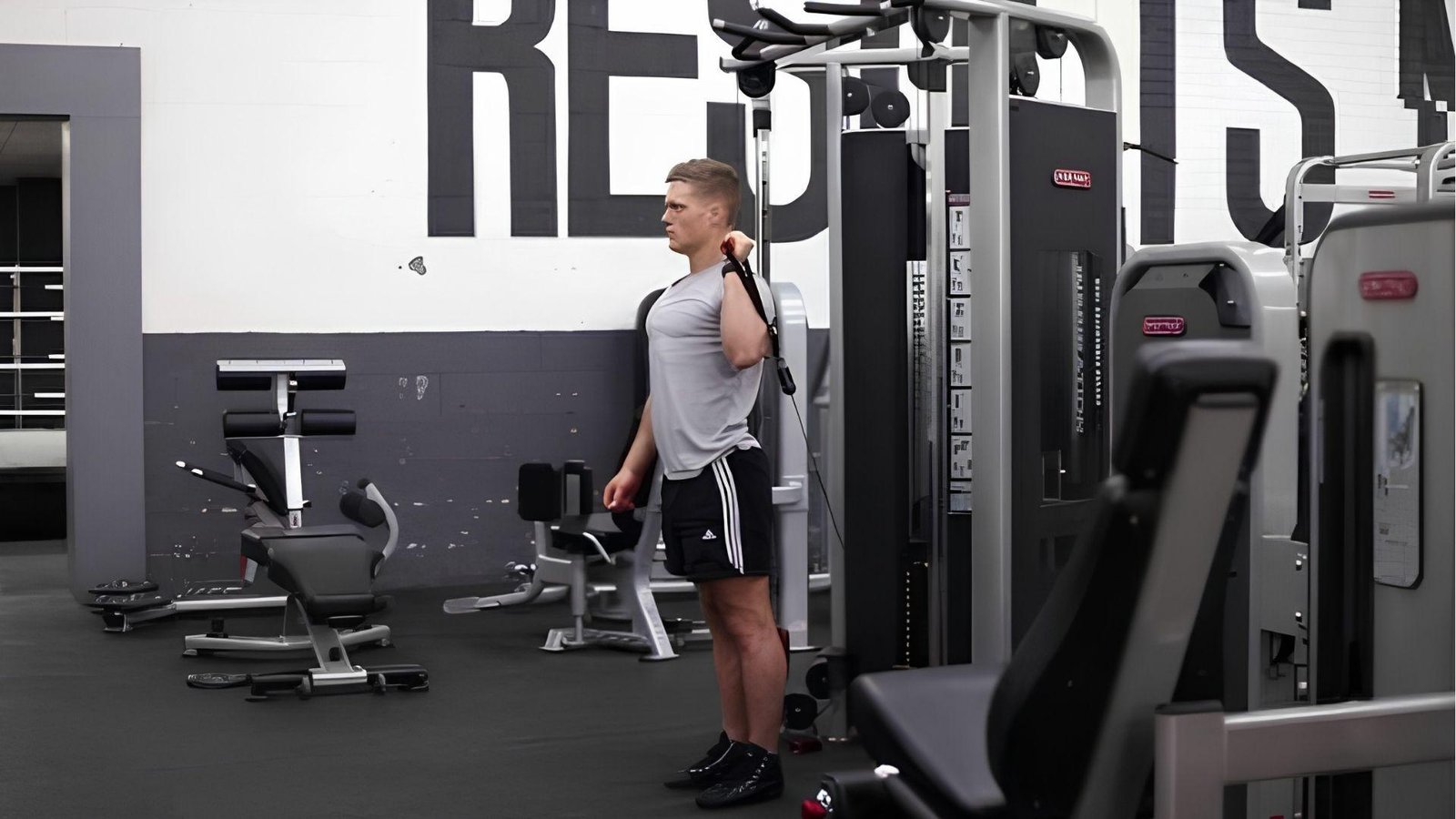
This exercise works your anterior deltoid, lateral deltoid, triceps, upper trapezius, and core stabilizers. Pressing with one arm at a time forces your core to stabilize, making it a more complete movement than a bilateral press.
Set the pulley low, hold the D-handle at shoulder height with one hand, press straight up, then lower slowly while keeping your torso upright and resisting the urge to lean away from the cable.
Do 3 to 4 sets of 8 to 10 reps per arm. If you need more stability, press from a seated position on a bench.The cable will try to pull you sideways. Brace your core and resist that pull. That resistance is what makes this version harder and more effective.
Muscles Worked During Cable Shoulder Workouts
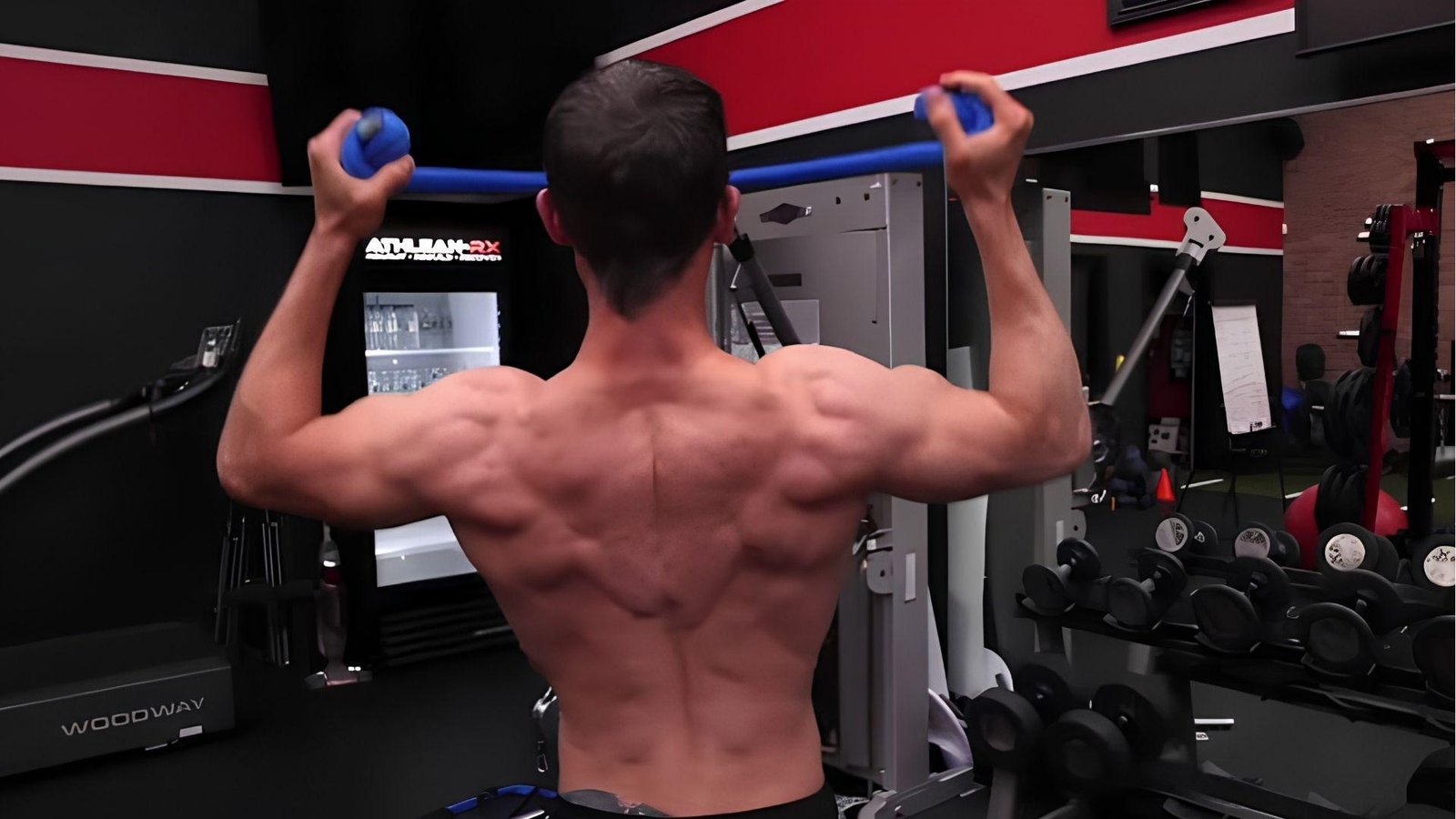
Cable shoulder exercises hit more than just the deltoids. Here's what's actually working.The anterior (front) deltoid fires during pressing and front raise movements, building thickness at the front of your shoulder.
The lateral (side) deltoid gets targeted during lateral raises and upright rows, creating that wide, rounded look.
The posterior (rear) deltoid activates during face pulls and rear delt flies, improving posture and balance.The rotator cuff, including the supraspinatus, infraspinatus, teres minor, and subscapularis, stabilizes the joint during every rep.
The serratus anterior kicks in during pressing to keep your shoulder blade in the right position. The trapezius ties it all together, supporting your shoulders through both pressing and pulling movements.
Tips to Get the Most Out of Cable Shoulder Workouts
Small adjustments make a big difference with cable training. These tips will help you get more from every session.
- Warm up first: Spend 5 to 10 minutes on light band work or arm circles before touching the cables. Cold shoulders are stiff shoulders.
- Start with compound movements: Hit the cable shoulder press first while you're fresh. Save lateral raises and rotations for the end.
- Slow your reps down: Aim for a 2-second lift and a 3-second lower. Slower reps mean more time under tension, which is where cable training really shines.
- Train all three delt heads: Don't just press. Add lateral raises, face pulls, and rear delt flies every session to keep your shoulders balanced.
- Add weight gradually: You don't need big jumps. One extra rep or a small weight increase each week adds up fast over time.
Conclusion
I'll be honest. Cable shoulder workouts changed how my shoulders look and feel. The constant tension, the flexibility in angles, the way you can isolate each part of the delt. It all adds up.
If you try even three or four of these exercises consistently, you'll notice a real difference in shoulder fullness and strength.
Start simple. Stay consistent. Add weight slowly.
Try one cable shoulder workout this week and see how it feels. Drop a comment and let me know which exercise surprised you the most.
Frequently Asked Questions
Can you build big shoulders with cables only?
Yes. Cables hit all three deltoid heads with constant tension, which is enough to build real size.
How many times a week should you do cable shoulder workouts?
Twice a week with at least 48 hours of rest in between works best for most people.
Are cables better than dumbbells for shoulder workouts?
Cables win on tension. They keep the muscle loaded through the full range of motion, which dumbbells don't.
What cable attachment is best for shoulder exercises?
Rope for face pulls, D-handle for raises and rotations, straight bar for upright rows.