
Want to get stronger and build muscle at the same time? A powerbuilding program blends heavy lifting with muscle building work, so you don't have to pick one or the other.
In this post, I will walk you through what a powerbuilding program is, why it works, and how to set one up for yourself.
You will get a full 4-day training split, nutrition tips, common mistakes to avoid, and simple ways to track your progress.
I have used this exact style of training for years, and it has helped me get stronger while still looking the part. By the end of this guide, you will know exactly how to start.
What Is a Powerbuilding Program?

A mix of heavy strength training and muscle building work rolled into one simple plan.
A powerbuilding program mixes two training styles into one plan. It takes the heavy lifting from powerlifting and pairs it with the muscle building work from bodybuilding. Some lifters call this style PHUL, short for Power Hypertrophy Upper Lower.
On your strength days, you focus on lifts like the squat, bench press, and deadlift. You lift heavy weight for low reps. This builds raw strength.
On your other days, you shift to higher reps and more exercises. This is where you add size to your muscles.
The result is a plan that makes you stronger and adds muscle at the same time. You are not stuck choosing between the two.
Benefits of a Powerbuilding Program

Get stronger, bigger, and more athletic, all from one training plan.
Build Maximum Strength
Heavy compound lifts train your body to move more weight, so your total strength goes up week after week.
This kind of heavy work targets myofibrillar growth, the muscle fiber changes that build raw strength. Your nervous system adapts alongside your muscles, which makes every lift feel more controlled.
Increase Muscle Size
Extra sets and higher reps give your muscles more work, which helps them grow bigger over time.
This is where sarcoplasmic growth comes in, the kind that adds visible size to your muscles. This added size also supports your strength numbers on your heavy days.
Improve Athletic Performance
Strength and muscle work together to make you faster, more powerful, and better at sports or daily activity. This carries over well whether you play a sport or just want more energy.
Develop a Balanced Physique
Training both strength and size helps you avoid weak spots and builds a body that looks and performs well. You end up strong in areas most single-focus programs tend to skip.
Core Principles of a Powerbuilding Program
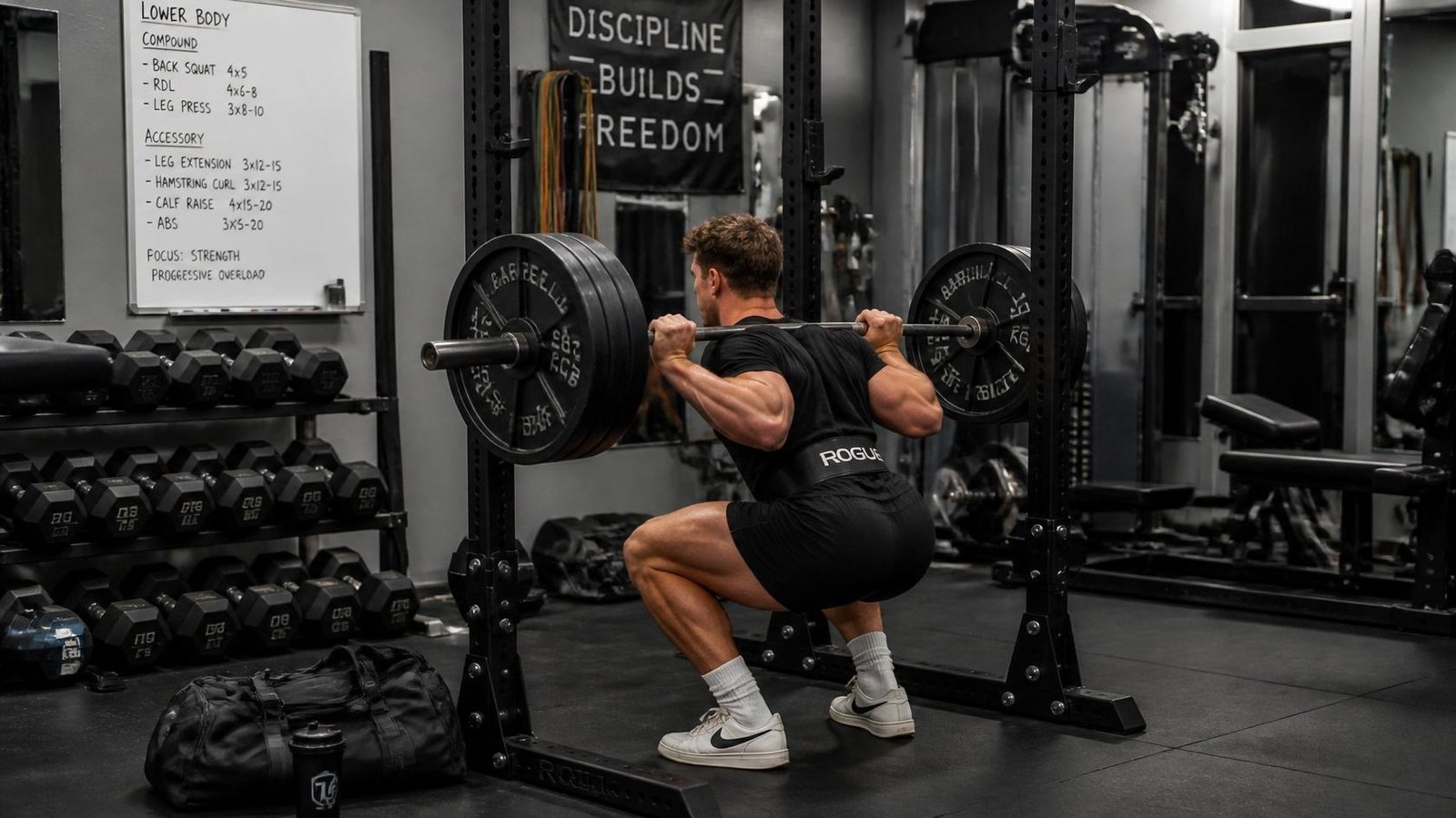
The four rules that make a powerbuilding plan actually work.
Prioritize Compound Lifts
Big lifts like squats, deadlifts, and presses work several muscles at once and should form the base of your plan.
They also call on more motor units than smaller exercises, which is part of why they build strength and size faster. They give you the most return for your training time.
Add Hypertrophy Accessory Exercises
Smaller, targeted exercises after your main lifts help you add muscle to specific areas your compound lifts miss. Think curls, lateral raises, and leg curls.
Use Progressive Overload
Slowly adding weight, reps, or sets over time is what forces your muscles and strength to keep improving. Without this, your body has no reason to change.
Balance Training Volume and Recovery
Doing enough work to grow, without doing so much that you cannot recover, keeps your progress steady and safe.
Planning these shifts in volume and intensity over time is called periodization, and it keeps your progress from stalling. Recovery is where the real growth happens.
4-Day Powerbuilding Program

A full weekly split covering strength and hypertrophy for both upper and lower body.
This plan follows an upper/lower split, one of the most common and effective ways to structure a powerbuilding week.
Day 1: Upper Body Strength
Bench Press:4 sets x 4-6 repsOverhead Press: 3 sets x 5 repsBarbell Row: 4 sets x 5 repsWeighted Pull-Up:3 sets x 6 reps
Day 2: Lower Body Strength
Squat: 4 sets x 4-6 repsRomanian Deadlift: 3 sets x 5 repsLeg Press: 3 sets x 8 repsStanding Calf Raise: 3 sets x 10 reps
Day 3: Upper Body Hypertrophy
Incline Dumbbell Press: 4 sets x 10 repsLat Pulldown:4 sets x 10 repsDumbbell Shoulder Press: 3 sets x 12 repsCable Row: 3 sets x 12 repsBicep Curl and Tricep Pushdown: 3 sets x 12 reps
Day 4: Lower Body Hypertrophy
Deadlift: 3 sets x 6 repsBulgarian Split Squat: 3 sets x 10 repsLeg Curl: 3 sets x 12 repsLeg Extension: 3 sets x 12 repsSeated Calf Raise:3 sets x 15 reps
How to Progress Your Powerbuilding Program

Simple ways to know when to push harder and when to pull back.
Increase Weight at the Right Time
Add weight only once you can complete all your sets and reps with good form. Jumping up too soon usually leads to broken form and stalled progress.
Track RPE or Reps in Reserve (RIR)
Rate how hard each set feels on a 1 to 10 scale, so you know when to push harder or pull back. This keeps your training honest, even on tired days.
Deload to Keep Making Progress
Take a lighter week every 4-6 weeks to let your body recover and come back stronger. Skipping this step often leads to burnout down the road.
Nutrition for a Powerbuilding Program

What you eat plays a big part in how well you build strength and muscle.
Protein and Calorie Requirements
Eat between 0.7 and 1 gram of protein per pound of body weight (about 1.6 to 2.2 grams per kilogram), and eat enough calories to support both strength and muscle gains.
A small, steady caloric surplus works better than a big one, since it builds muscle without piling on extra fat. This gives your body the raw material it needs to grow.
Carbohydrates and Healthy Fats
Carbs fuel your workouts, while healthy fats support your hormones. Both play a role in how well you recover and how strong you feel in the gym.
Pre- and Post-Workout Nutrition
A meal with protein and carbs before and after training helps you perform better and recover faster. The post-workout meal helps kickstart muscle protein synthesis, the process your body uses to repair and build muscle. Simple timing here makes a real difference over time.
Exercise Substitutions

Easy swaps to use if a lift bothers your joints or does not fit your gym.
Upper Body Alternatives
If a lift bothers your joints, swap the bench press for a dumbbell press, or the barbell row for a chest supported row. Both options still hit the same muscles well.
Lower Body Alternatives
You can swap the squat for a leg press, or the deadlift for a trap bar deadlift if your back needs less strain. These swaps still build strength without added risk.
Common Powerbuilding Mistakes to Avoid
A few small habits that quietly slow down your strength and muscle gains.
- Skipping Progressive Overload: Increase your weights, reps, or sets gradually to keep challenging your muscles and building strength.
- Using Poor Exercise Technique: Focus on proper form throughout every lift to maximize muscle activation and reduce injury risk.
- Ignoring Recovery: Get enough sleep, take rest days, and allow your muscles time to recover between workouts.
- Training With Too Much Volume: Avoid excessive sets and exercises that can lead to fatigue, poor performance, and overtraining.
- Training With Too Little Volume: Make sure you perform enough quality sets each week to stimulate muscle growth and strength gains.
Staying on Track for the Long Run

Getting results from a powerbuilding program is not about one great workout. It is about showing up week after week and sticking to the plan, even on days you do not feel like it.
Small, steady effort adds up over months.
Keep your workouts simple, track your numbers, and give your body time to respond.
This mindset is what separates people who see real change from people who quit too soon.
Tips for Getting the Best Results
- Warm Up Every Session: Spend 5-10 minutes on light cardio and dynamic stretching before you load up the bar.
- Stay Consistent With Your Training: Show up for your sessions even on the days you do not feel motivated.
- Track Every Workout: Write down your weights and reps so you can see your progress over time.
- Prioritize Sleep and Recovery: Aim for 7-9 hours of sleep so your muscles can repair and grow.
- Follow a Structured Nutrition Plan: Stick to a plan that gives you enough protein and calories daily.
- Be Patient With Your Progress: Strength and muscle gains take months, not days, so trust the process.
Conclusion
You now have a full plan to build strength and muscle without picking just one path. I started powerbuilding a few years ago, and it changed how I train for good.
It kept my workouts fun while still pushing me to lift heavier.
Give this powerbuilding program a real shot and stick with it. If you found this helpful, drop a comment below and share it with a friend who needs a new plan.
Check out our other training guides too.
Frequently Asked Questions
Is powerbuilding good for beginners?
Yes, powerbuilding works well for beginners since it builds a strong base while also adding muscle. Just start with lighter weight and focus on form.
How many days a week should I do powerbuilding?
Most people do well with 4 training days a week. This gives enough time to train hard and recover between sessions.
Can I build muscle and strength at the same time?
Yes, a powerbuilding program is built to do both. Heavy lifts build strength while accessory work adds muscle size.
How long until I see results from powerbuilding?
Most people notice strength gains within a few weeks. Visible muscle growth usually takes 8-12 weeks of steady training.
Do I need supplements for powerbuilding?
No, supplements are not required. A solid diet with enough protein and calories will support most of your training needs.