
I know how it feels to stare at the erg screen with no clear plan. Random rowing gets you nowhere fast, and burnout comes quick when every session looks the same. That is why this guide gives you real workouts, not guesswork.
You will find plans for the rower, SkiErg, and BikeErg, built for beginners and gym regulars alike.
Rowing works close to 85 percent of your muscles in one motion, which is why it builds strength and stamina at the same time. Studies on endurance athletes also show that most training gains come from steady, lower effort work, not constant hard pushes.
Inside, you get beginner drills, 2k speed sessions, strength pieces, and fun group formats. Pick a workout below and get moving today.
What Makes an Erg Workout Actually Work?
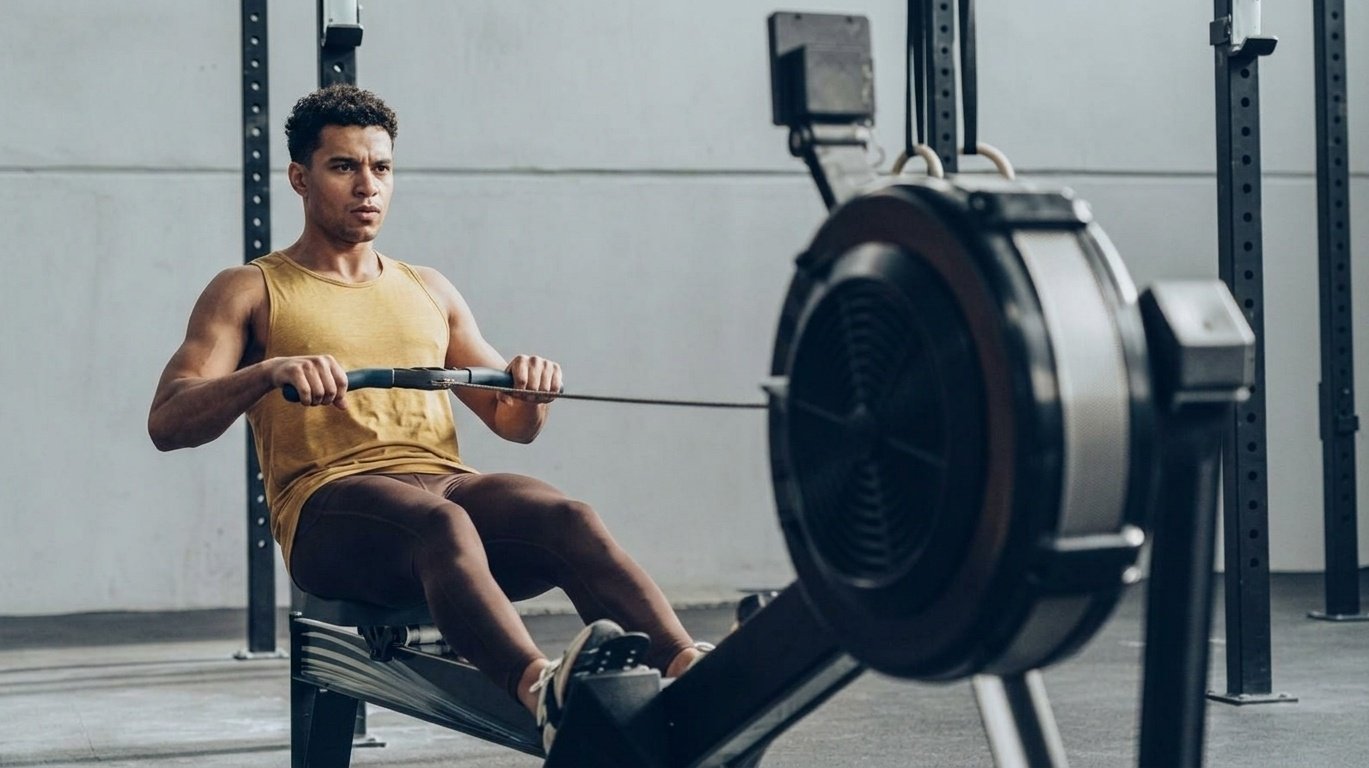
Good erg training comes down to a few basics.
Stroke rate control matters more than raw effort, since a high rate with poor form wastes energy. Aerobic and anaerobic work both play a role, and mixing steady pieces with intervals builds a stronger base.
Watch your force curve too. A smooth pull that uses legs, body, then arms beats a stroke that spikes early and fades.
Damper settings change the feel, not the difficulty, so pick one that matches your goal, not your ego.
Most rowers track progress through split time or watts on a PM5 monitor, and the ErgData app makes it easy to load these plans straight onto the screen.
Erg Workouts for Beginners: Start Here

Start slow and focus on form before speed. Short sessions with steady pacing build the habit and protect your back and knees.
Your First 20 Minutes on Any Machine
Begin with a 5 minute warm up at light pressure. Row, ski, or bike at a pace where you can talk without gasping.
Keep your stroke rate around 20 to 24 spm on the rower, or a steady rhythm on the bike and ski. Finish with 3 to 5 minutes of easy movement to cool down.
This simple structure teaches your body the basic motion before you add speed or resistance.
How to Build Stroke Rate Without Losing Form?
Add stroke rate slowly, a few beats at a time. Try 2 minutes at 20 spm, then 2 minutes at 22, then 24.
Watch your split time. If it does not improve as the rate goes up, your form is breaking down. Drop back a few beats and rebuild.
This method trains control first, so speed comes from power, not rushed strokes.
Best Erg Workouts by Machine
Each machine trains the body differently, so your workout should match the tool. The rower builds full body power through legs, back, and arms. The SkiErg leans on your core and upper body, while the BikeErg gives your joints a break.
RowErg Sessions Built for Power and Endurance
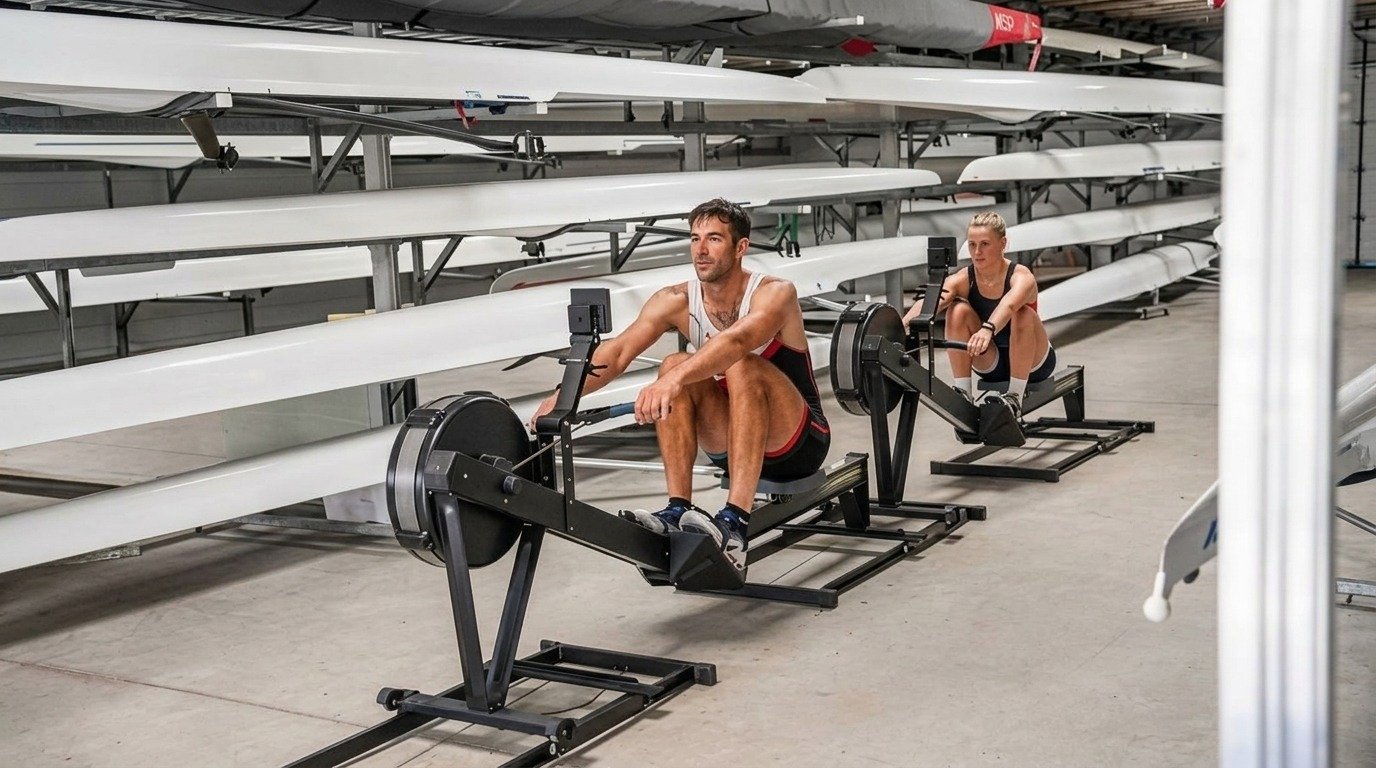
Try 6 rounds of 5 minutes on, 1 minute off, holding 24 to 26 spm. Keep effort at about 75 percent so you can finish strong.
This format, used by rowing clubs for years, builds aerobic capacity while teaching pacing. For a power focus, row at a low rate like 18 to 20 spm with full pressure for 30 to 40 minutes, letting your legs drive each stroke.
You can also track this effort in watts if you prefer a steady power number over split time.
SkiErg Drills That Hit Your Core and Upper Body
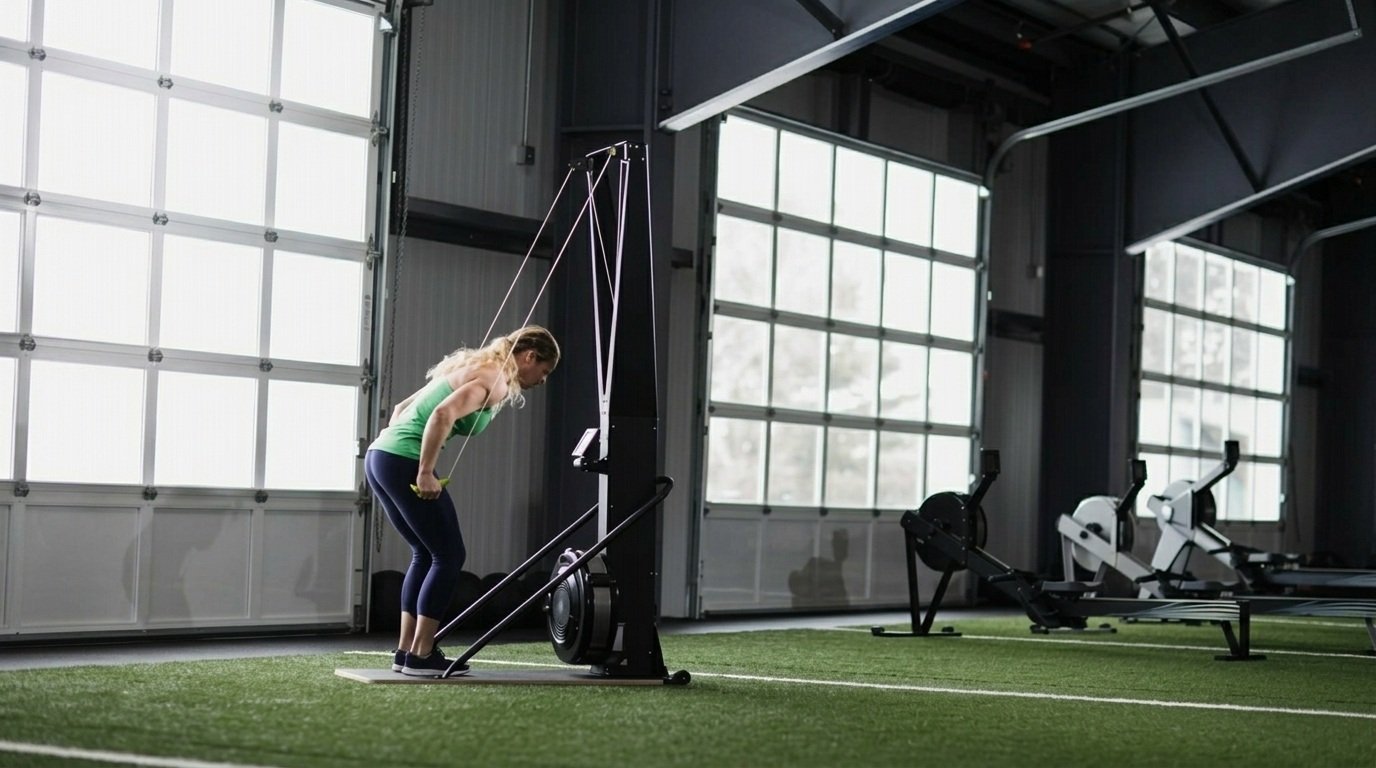
A simple SkiErg session is 4 rounds of 250 meters followed by core work like sit-ups or planks. The pulling motion works your lats, shoulders, and abs harder than rowing does.
Keep your rhythm steady rather than rushing the pull. Over time, this builds grip strength and shoulder endurance, which carries over well to other sports and lifting.
BikeErg Workouts for Low Impact Cardio Gains
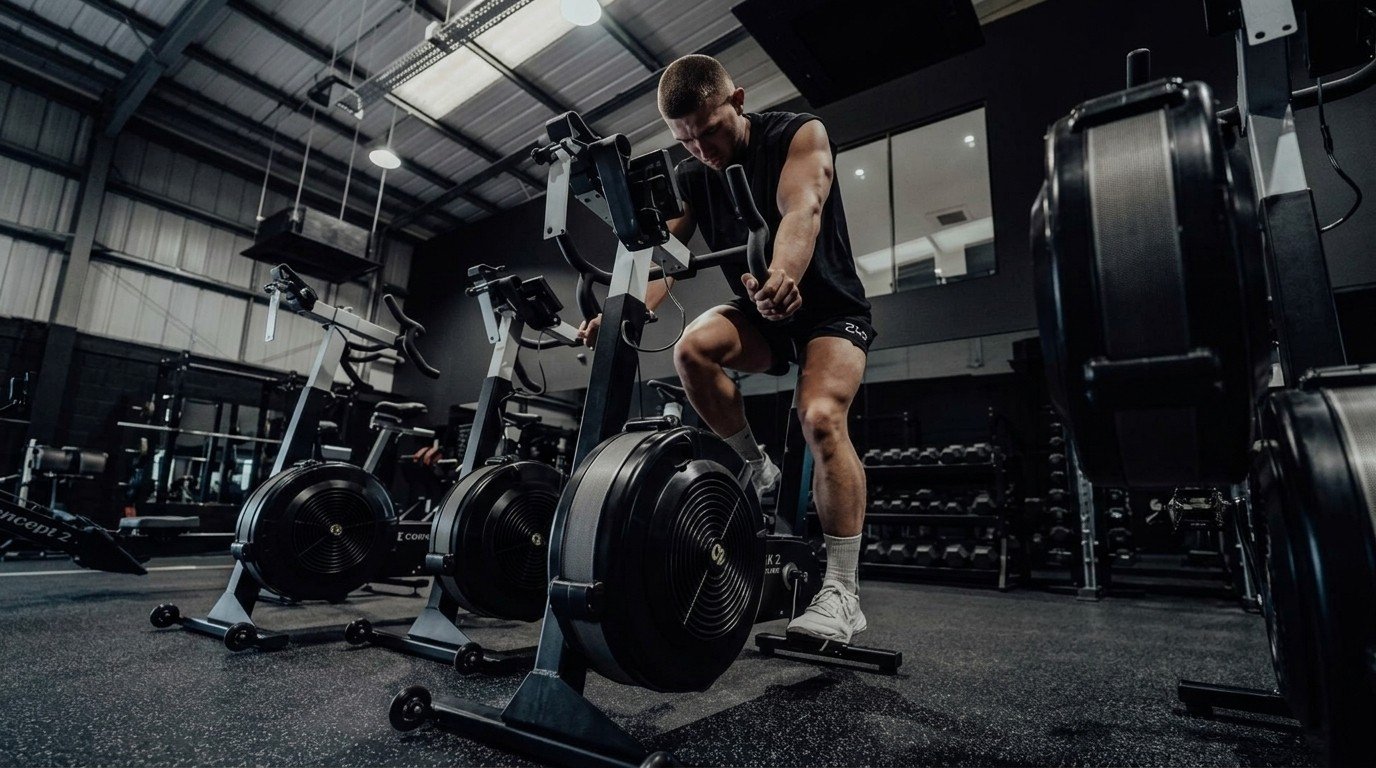
The BikeErg is easier on joints, making it good for recovery days or longer sessions. Try 30 minutes at a steady cadence of 70 to 90 rpm, keeping effort conversational.
For more intensity, add 5 rounds of 1 minute hard pedaling with 2 minutes easy between. This builds cardio fitness without the impact stress of running.
Erg Workouts to Improve Your 2k Time
A faster 2k needs both speed and the ability to hold pace under fatigue. These workouts train your body to push hard without falling apart in the final minutes.
Interval Ladders That Build Race Pace
Try rowing 1, 2, 3, 4, 3, 2, 1 minutes on, with equal rest between each. Row at close to race pace on the shorter pieces and slightly easier on the longer ones.
This ladder format, common among competitive rowers, teaches you to shift pace without losing stroke length. It also trains mental toughness for the middle of a 2k, where most people slow down.
Threshold Pieces That Teach You to Hold Speed When Tired
Row 4 sets of 8 minutes at a stroke rate of 24 to 26, resting 2 minutes between sets. Keep your split consistent across all 4 pieces rather than fading.
This threshold style training raises your anaerobic threshold, meaning you can hold a faster pace before your legs and lungs give out during a real 2k test.
Building Your Aerobic Base: Zone 2 and Steady State Training
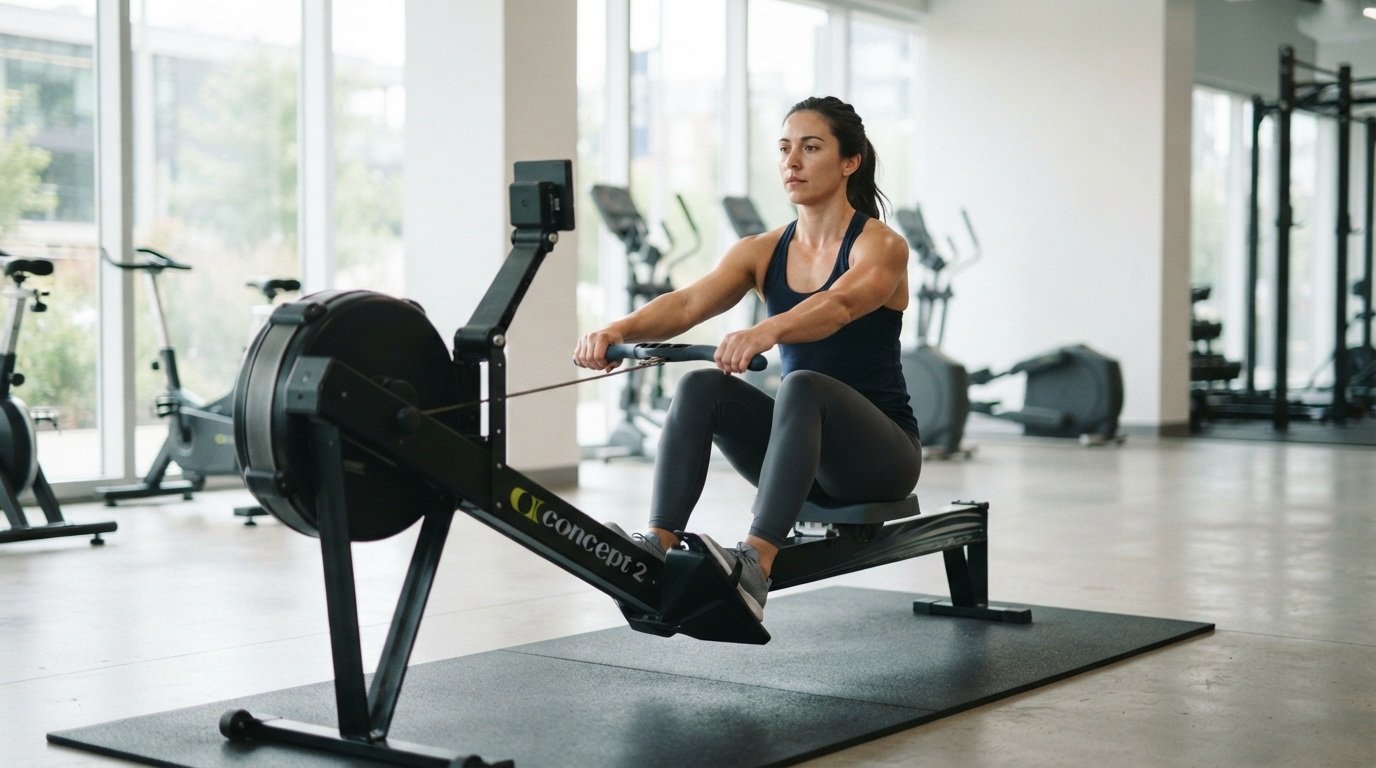
Not every erg session needs to hurt. Some of the best gains come from slowing down and putting in steady miles.
Why Zone 2 Matters for Every Erg Session?
Steady state training builds your aerobic engine. This is the base that supports every other workout you do. Zone 2 means a pace where you can still talk, usually 60 to 70 percent effort.
Most elite rowers spend the bulk of their training time here, not in hard sprints.
Research on endurance athletes backs this up. Studies show that roughly 80 percent of training should sit at this low, easy intensity, with only 20 percent spent going hard. This type of training also raises your VO2 max, which is your body's ability to use oxygen during hard effort.
Long Aerobic Pieces to Build Your Engine
Row 40 to 60 minutes at a steady pace. Keep your heart rate in a comfortable, conversational zone. Hold stroke rate around 20 to 24 spm the whole time.
This kind of session may feel slow, but it builds the base fitness that lets your hard workouts feel easier over time. Consistency here matters more than speed.
Power Strokes That Break Up a Long Steady Row
During a long steady row, add a 10 stroke power push every 1000 meters. Pull harder and faster for those 10 strokes, then return to your easy pace.
This keeps your mind engaged during a long session. It also trains your body to shift gears without losing form, a skill that helps during race surges.
Strength Focused Erg Workouts
Strength on the erg comes from low stroke rate and high pressure, not speed. This style builds raw power in your legs, back, and arms while teaching proper sequencing through the drive.
Low Rating, High Pressure Sessions for Raw Power
Row 3 rounds of 10 minutes at 18 to 20 spm, using full pressure on every stroke. Focus on driving with your legs first, then swinging your back, then finishing with your arms. Rest 2 minutes between rounds.
This slow, heavy style builds the same muscles used in strength training, without needing any weights.
Damper Ladders That Build Full Body Strength
Try 6 minutes at damper 10 and 18 spm, then 5 minutes at damper 8 and 20 spm, stepping down damper and up stroke rate every round.
This ladder, used by many rowing coaches, teaches your body to keep proper form even as resistance changes. It builds strength while protecting your lower back from bad habits.
Erg Workouts with a Crossfit Twist
Mixing the erg with bodyweight moves keeps workouts fun and builds full body conditioning. These formats are popular in gyms because they combine cardio with strength in one session.
AMRAP Combos with Kettlebells and Push-ups
Set a 20 minute clock and row 500 meters, then do 10 kettlebell swings, 10 push-ups, and 10 squats. Repeat as many rounds as you can in the time.
This AMRAP style keeps your heart rate high throughout and builds work capacity across different muscle groups, which helps with both fitness and fat loss goals.
Descending Ladders That Test Your Grit
Row 500, then 400, then 300, then 200, then 100 meters, doing matching reps of air squats and sit-ups after each piece. The shrinking distance lets you push harder as fatigue builds.
This format is a favorite in strength gyms because it rewards good pacing early and strong finishing power at the end.
Partner and Group Erg Workouts
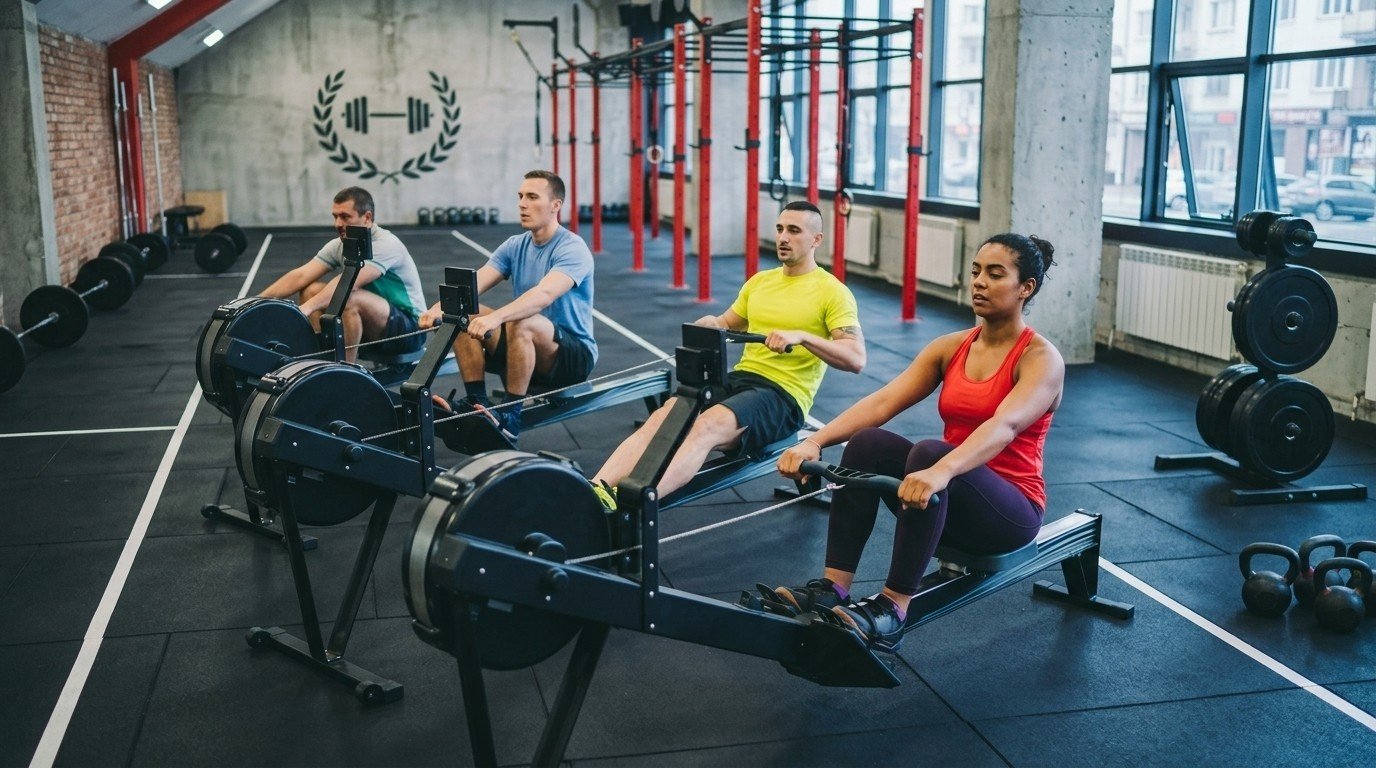
Training with others adds motivation and makes long sessions feel shorter. Many gyms and rowing clubs use partner formats to build team spirit while still hitting solid training targets.
Relay Formats for Team Training Days
Split into teams of 2 or 3, with each person rowing a set distance before tagging the next. Try 250 meter relay legs for a fast paced version, or 1000 meters for an endurance focus.
This format builds accountability, since your pace affects the whole team's result, not just your own.
Dueling Machines: Row and Ski Back to Back
Alternate 1000 meters on the rower with 1000 meters on the SkiErg, switching machines every round for 6 total rounds. Keep a steady, challenging pace on both.
This combo trains different muscle groups back to back, which builds overall conditioning and keeps the workout interesting compared to sticking with one machine.
Common Mistakes That Slow Down Your Erg Progress
Even experienced rowers fall into habits that quietly stall their progress. Watch for these five mistakes and fix them early to keep every session working in your favor.
- Starting too hard on every piece: Going out fast feels good at first, but it drains your legs before the workout is half done. Pace yourself so your last piece is as strong as your first.
- Skipping warm up and cool down: Jumping straight into hard rowing raises injury risk and hurts performance. A short warm up preps your muscles, and a cool down helps your body recover faster for the next session.
- Ignoring stroke rate targets:Rowing at a high rate without control wastes energy and breaks your form. Focus on power per stroke instead of chasing a high number on the monitor.
- Chasing calories over proper form: The calorie count on the screen does not reflect good technique. Poor form might burn more calories short term, but it leads to fatigue and injury over time.
- Skipping recovery days between hard sessions: Doing intense workouts every day without rest leads to burnout and slower gains. Give your body at least one recovery day between tough pieces to let it adapt and grow stronger.
Conclusion
Erg workouts only work when you match stroke rate, damper, and effort to your goal. Track your split time or watts on your PM5, log it in ErgData, and stay consistent with zone 2 days between hard pieces.
The one thing to remember is this: strong form always beats fast strokes.
Try one workout this week, then share this blog with your gym friends or drop a comment below with your favorite piece.
Frequently Asked Questions
How many calories does an erg workout burn?
A 30 minute session can burn 200 to 400 calories, depending on effort and body weight. Higher stroke rate and pressure burn more.
How often should I do erg workouts each week?
Most people do well with 3 to 5 sessions a week. Mix hard days with easy zone 2 rows to balance the load.
Is erg rowing as good as rowing on water?
Erg rowing builds similar strength and cardio fitness, though it skips balance and steering skills. Many competitive rowers use it as their main training tool in winter.
What is the best way to measure progress on the erg?
Track your split time and watts each week, not just how tired you feel. Small drops in split time over a month show real progress.
How long until I see results from erg workouts?
Most people notice better stamina and stroke control within 3 to 4 weeks of steady training. Faster splits and strength gains often show up after 6 to 8 weeks.